Published February 20, 2020 12:22AM
Find Your Perfect Long Trail Pace
Hike with efficiency, speed, and intention, and you’re sure to accomplish your thru-hiking goals. Here’s how to plan your pace and fight lollygagging tendencies to reach the terminus before winter does.
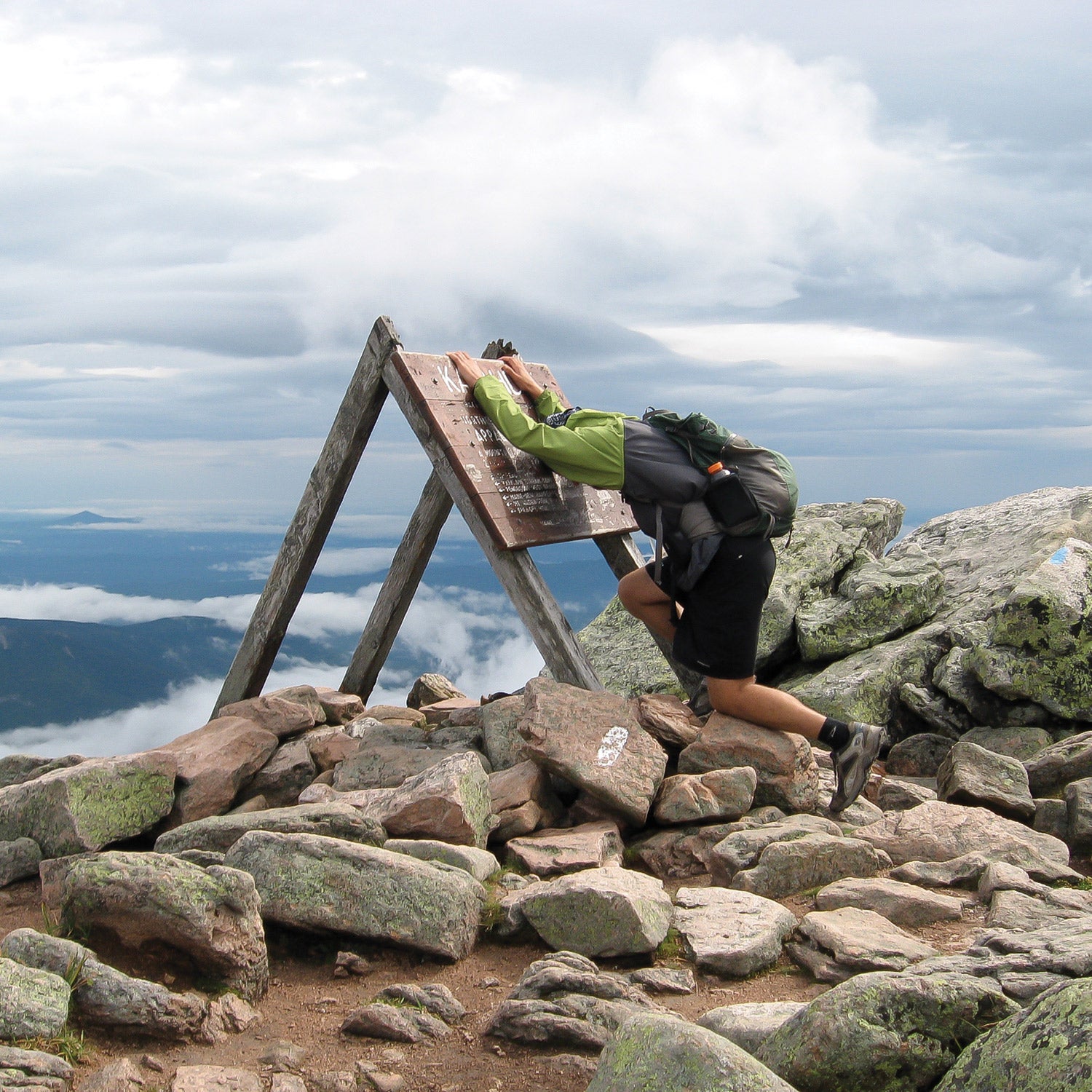
'John Fegyveresi'
Too fast and you’ll injure yourself or burn out. Too slow, and you’ll get snowed off the trail. Setting a good pace is essential to succeeding on a long trail. We asked hikers who did for their secrets.
How Fast Will You Finish the Appalachian Trail?
1. What time did you wake up?
- My alarm goes off at 6 a.m. (+1)
- With the birds (around 4:30 a.m.). (+3)
- When the rest of the campsite got up. (+0)
- Just in time for lunch. (-3)
2. Did you cook breakfast and coffee?
- Instant coffee, then I’m out. (0)
- Pour-over. I need a minute. (-1)
- Full array of oats and another cup of Joe, please. (-2)
- No. I scarfed a granola bar and drank a cold brew. (+1)
3. Who are you with?
- My trail fam is like a multi-generation artist collective. (-3)
- Same person I started with. (-1)
- Two buddies who share my pace. (0)
- Me, myself, and I. (+1)
4. You see a beautiful view. Are you gonna stop?
- That’s why I packed a tripod. (-2)
- This is a rare treat in Virginia. (0)
- Seen one, seen ‘em all. Giddyup! (+2)
- Maybe? Depends on how I’m feeling. (+1)
5. You’re hungry. Where are your snacks?
- In my food bag, packed in the middle of my backpack to give me an advantageous center of gravity. (-2)
- In my toplid. Can you grab them for me? (-1)
- In my hipbelt pockets. My trail name is Quick Draw. (0)
- I am literally eating as I answer this question. (+1)
6. It’s raining cats and dogs as you stop in a shelter midmorning for a break. What’s next?
- Set out my sleeping bag and pull out the novel. Day over. (-4)
- Wait here until the rain abates then carry on. (0)
- Head 3 miles to the next road crossing where hostel staff will pick me up. (-1)
- Keep on keepin’ on. It’s just rain. (+4)
7. Did you bring a book?
- Harry Potter is my hiking partner. (-2)
- Half a paperback. The other half is back in Harper’s Ferry. (0)
- I just read the trail registers. (+1)
- No. I’m going to bed. (+3)
8. How heavy is your pack’s base weight?
- About 10 pounds (+2)
- About 20 pounds (0)
- About 30 pounds (-1)
- I don’t know, can you help me lift it? (-3)
9. How fit are you?
- I do my laundry on my washboard abs. (+3)
- I eat miles for breakfast. (+1)
- About average. (0)
- Miles eat me for breakfast. (-2)
10. When’s quitting time?
- Oh, you know. It depends. (0)
- Whenever I hit the first water source or shelter after 3 p.m. (-1)
- I like to cook just before it gets dark. (+1)
- My headlamp has seen a lot of miles. (+3)
ADVERTISEMENT
Score
Now tally up your total. Here’s how to interpret.
- -20 Stick to weekend warrior hikes
- -10 to -19 Practice saying “section hiker”
- -5 to -9 Plan to flip flop
- -4 to 4 About 6 months
- 5 to 9 About 4 months
- 10 to 19 Faster than most
- 20+ FKT!
Zero vs. Nearo
If there’s one thing all thru-hikers look forward to, it’s not hiking for a bit. There’s nothing like a day off the trail to recuperate, resupply, and relax. But inherent in resting is a dilemma: to take a zero day (no miles) or a nearo (nearly no miles)? Triple Crowner and author Barney “Scout” Mann explains how he decides.
Rest is important and individual. Thru-hikers cram so much into a zero day: eat, shower, eat, wash clothes, eat, phone calls, eat, re-supply, gear repair, and sleep. My good buddy Rolling Thunder once said, “you need a zero day to recover from a zero.” Make a list of all of the tasks you need to accomplish the day before. Long list and weary legs? Take a zero. Just need to run a quick errand? Go for the nearo. My personal favorite is a nearo followed by a zero. I do a 10-by-10 (10 miles by 10 a.m.), take the rest of that day in town to do all my chores, and then luxuriate in a true zero.
ADVERTISEMENT
How Fast Are You?
Pace is a squishy concept. Fitness, terrain, and other factors all play a part. Here’s a rough equation for the average backpacker: Take your total distance and divide by two. Add one hour for every 1,000 feet of elevation gain. The result is how many hours until you reach your destination.
How to Hike 25 Miles Every Day
If you want to go the distance day in and day out, you’ll have to work up to a challenging rhythm. Here’s the schedule one of our editors swears by for long days that are repeatable.
4:45 a.m. Wake up
4:47 a.m. Deflate mat, pack up sleeping bag, exit tent
4:52 a.m. Retrieve food, brush teeth, stretch; change into hiking layers, pack tent
5:10 a.m. Put morning snacks in hipbelt pockets, load pack
5:15 a.m. Start walking; eat a no-cook breakfast on the move
6:15 a.m. Snack (aim to onboard at least 250 calories per hour)
7:30 a.m. Snack
8:30 a.m. Snack; 8 miles complete
10 a.m. 10 miles complete
10:30 a.m. Snack
12 p.m. 12 miles complete; lunch break; prep afternoon snacks
12:20 p.m. Get moving
1:30 p.m. Snack
2 p.m. 16 miles complete
3 p.m. Snack
4 p.m. 20 miles complete; afternoon break; prep final snacks
4:30 p.m. Get moving
5:30 to 6:30 p.m. Arrive at campsite (22 to 25 miles complete), pitch camp, change clothes
7 p.m. Big dinner, stretching, hang-out time
8:15 p.m. Food in tree, self in tent
8:30 p.m. Pass out, hard