Published February 25, 2022 01:45PM
This Is Why Your Feet Hurt on the Trail—and How to Fix It
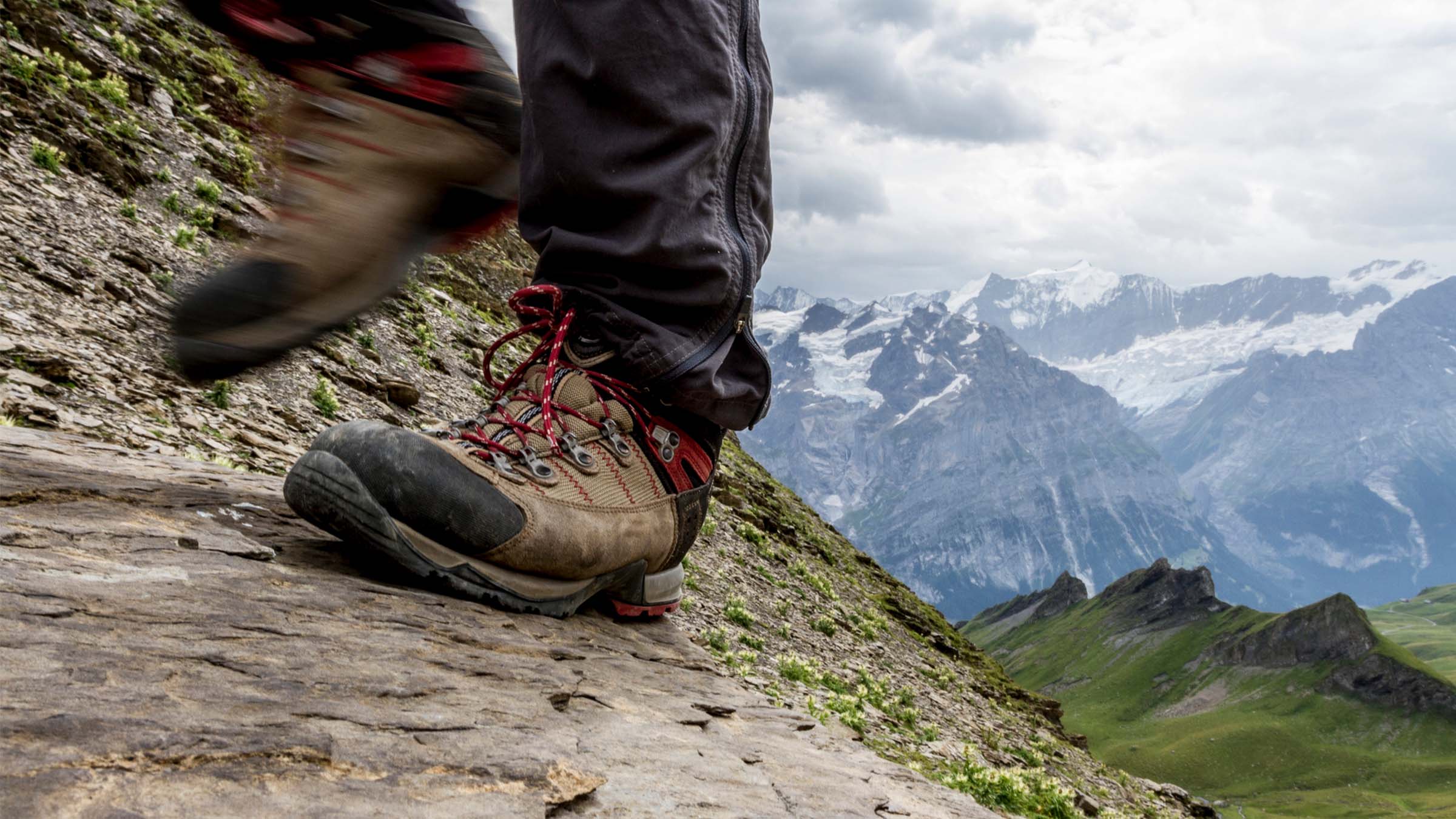
(Photo: Henrik Trygg/Corbis Documentary via Getty Images)
Ask any hiker, and they’ll tell you about having sore and painful feet during at least one adventure. Occasional foot soreness isn’t unexpected, but when the pain lingers long after the hike ends, it’s time to investigate the cause.
There are numerous causes of foot pain, such as plantar fasciitis and stress fractures, but one commonly overlooked issue for hikers is posterior tibial tendonitis. The posterior tibialis is a muscle in the lower leg that helps control ankle stability on uneven terrain and is partly responsible for maintaining the arch shape of the foot. When the posterior tibialis becomes fatigued, it will struggle to support the arch. This can lead to overuse injuries such as tendonitis.
Posterior tibalis tendonitis results in pain under the arch, where the tendon attaches to the mid-foot bones. You may also feel tenderness on the backside of your shin bone just above the ankle bone or pain up the lower calf muscle. You can also experience discomfort while walking in general or hiking uphill. Due to pain in this area, hikers may assume it’s an Achilles issue—but that is not always the case.
ADVERTISEMENT
Tendonitis can linger for up to six weeks depending on the severity of the injury. Icing can help reduce pain, and strengthening exercises will help support the right muscles and stimulate healing. You may also find that replacing worn out shoes or finding orthotics to provide arch support may help prevent repeat occurrences.
The only way to know for sure if you have posterior tibial tendonitis is to visit a medical provider who will administer muscle tests, along with imaging to determine a correct diagnosis. However, the following assessment can help you analyze your pain at home.

Assess Your Pain
One quick test to see if you may have posterior tibial tendonitis is the single-leg heel raise. Stand on one foot and raise your heel so your weight is on the ball of your foot. If this motion causes pain in the arch of your standing foot, you could have posterior tibial tendonitis, and you should consider strengthening your foot to prevent it from getting worse.
Relieve Your Pain
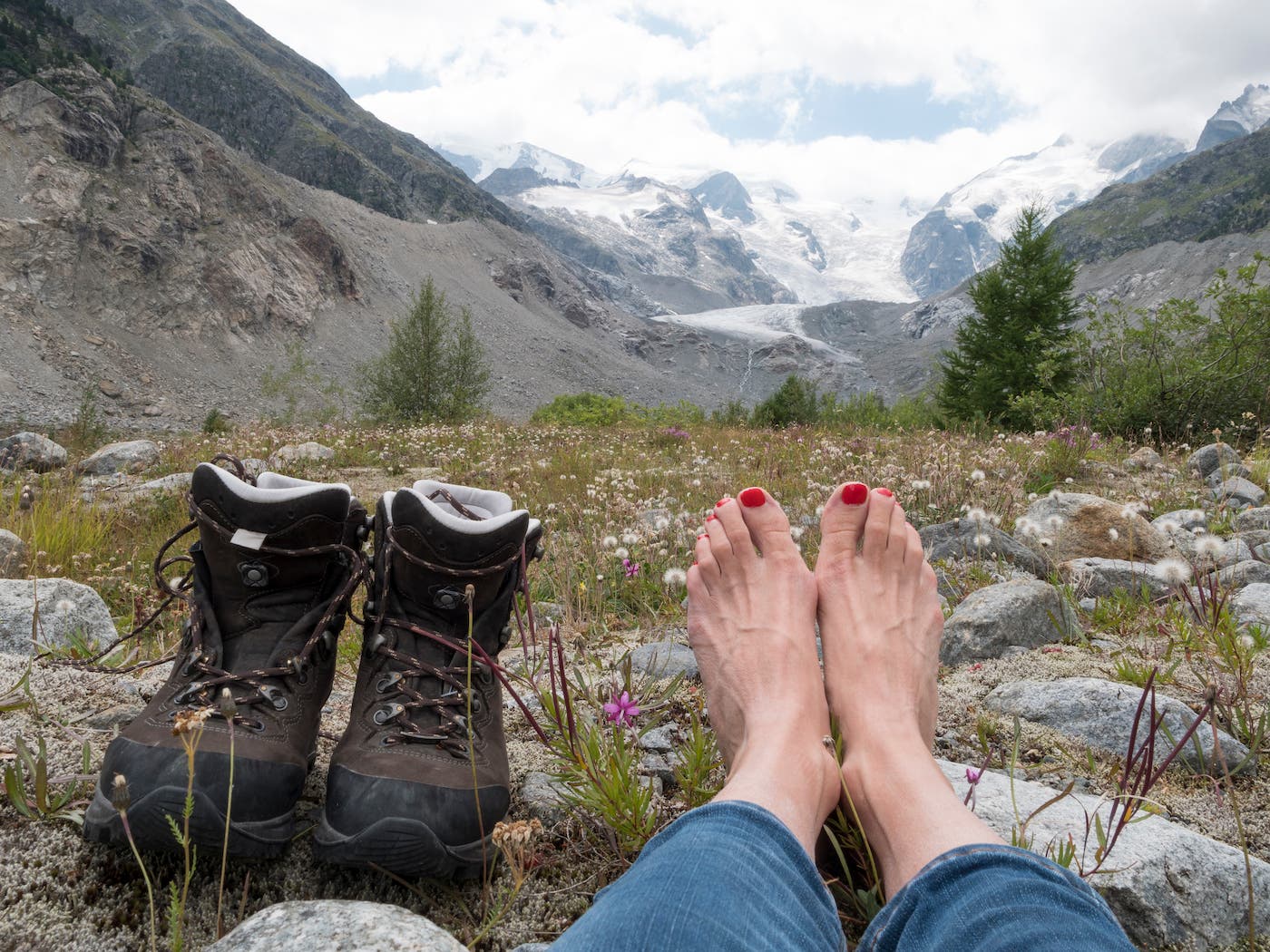
If you start feeling sore feet on a thru-hike, there are ways to manage pain and relieve it at your campsite every night. Note that this doesn’t mend any underlying injuries.
- Take your boots off! Give them a break from the confines of your shoes, and rest your feet in nearby water or snow to reduce inflammation. Perform hydrotherapy for 10-15 minutes.
- Massage your feet to promote circulation and stimulate drainage.
- Keep wet boots away from a strong heat source, like a stove or fireplace. It dries them out too fast and makes them too stiff for your feet.
If you feel pain while dayhiking, there are also ways to relieve sore feet when you get home.
- Let your feet rest in a warm epsom salt bath for 15 minutes, then transition to a cold bath (or ice pack) for 10 minutes. Repeat two or three times, and be sure to end on cold. This alternating temperature contrast promotes recovery and relieves sore muscles.
- Get regular foot and leg massages to loosen up tight muscles and connective tissue.
- Schedule an appointment with a PT.
- Lighten your load before you leave on your next trip. Less weight in your pack means less pressure on your feet.
ADVERTISEMENT
Strengthen Sore Feet
These exercises reinforce the posterior tibialis and other supporting muscles to help reduce the risk of injury; do them as a preventative measure, as they’re safe to start if you are experiencing sore feet or other pain now. Perform three sets of 15 for each of these exercises four to five times per week. These can be done during rest breaks of your regular workouts.
Ball squeeze heel raise
This exercise strengthens the posterior tibialis and tendon, and builds the endurance needed to help support the arch of the foot. Standing near a wall or countertop for balance, place a tennis ball between the inside of your heels, your feet pointing forward. Squeeze the ball with moderate pressure as you raise your heels up, coming onto the balls of your feet. Lower and repeat.
Forward step-down
This exercise will strengthen the soleus, a deep calf muscle that helps provide stability for the ankle and assists the posterior tibialis. Standing on a 4- to 6-inch-high step on your right foot, begin by flexing your right foot upward (like taking your foot off a gas pedal), and slowly lowering your left heel toward the ground. Tap your left heel on the floor while keeping your foot flexed up. Use a countertop or wall for support if needed. Work to keep your hips level and avoid letting your knee collapse inward during the step-down.
ADVERTISEMENT
Ankle Inversion
This exercise targets the posterior tibialis and supporting muscles to aid arch support while you walk, helping prevent sore feet after a long hike. Sit on the floor with your legs straight out in front of you. Place a resistance band around the bottom of your right foot. Cross your left leg over your right at the ankle, pressing your left foot into the band as you do so. Both sides of the band should cup the left arch—this will create the tension needed for the exercise. Holding the ends of the band with both hands, rotate the sole of your right foot inward and down, away from the left. Avoid rotating your right leg as you sweep the ankle inward—keep the motion through the ankle as much as possible.
Note: Some pains should not be self-treated. See a doctor if you feel sharp pain, pain that lingers, numbness, tingling, or swelling that you cannot explain. These may be signs of a larger problem. When in doubt, seek medical advice.
Lee Welton is a physical therapist assistant and personal trainer in southeast Idaho. He thru-hiked the Pacific Crest Trail in 2018 and has trekked through the Dolomites in Italy. He can typically be found hiking and exploring the trails in Idaho and Wyoming. For more information, videos, and resources from Welton, visit trailsidefitness.com.
