Updated March 18, 2024 03:52PM
Pacific Crest Trail: A Beginner's Guide to the Hike of a Lifetime
Dreaming of a long, long walk up the spine of the West Coast with a few good friends? Here's what you need to know.
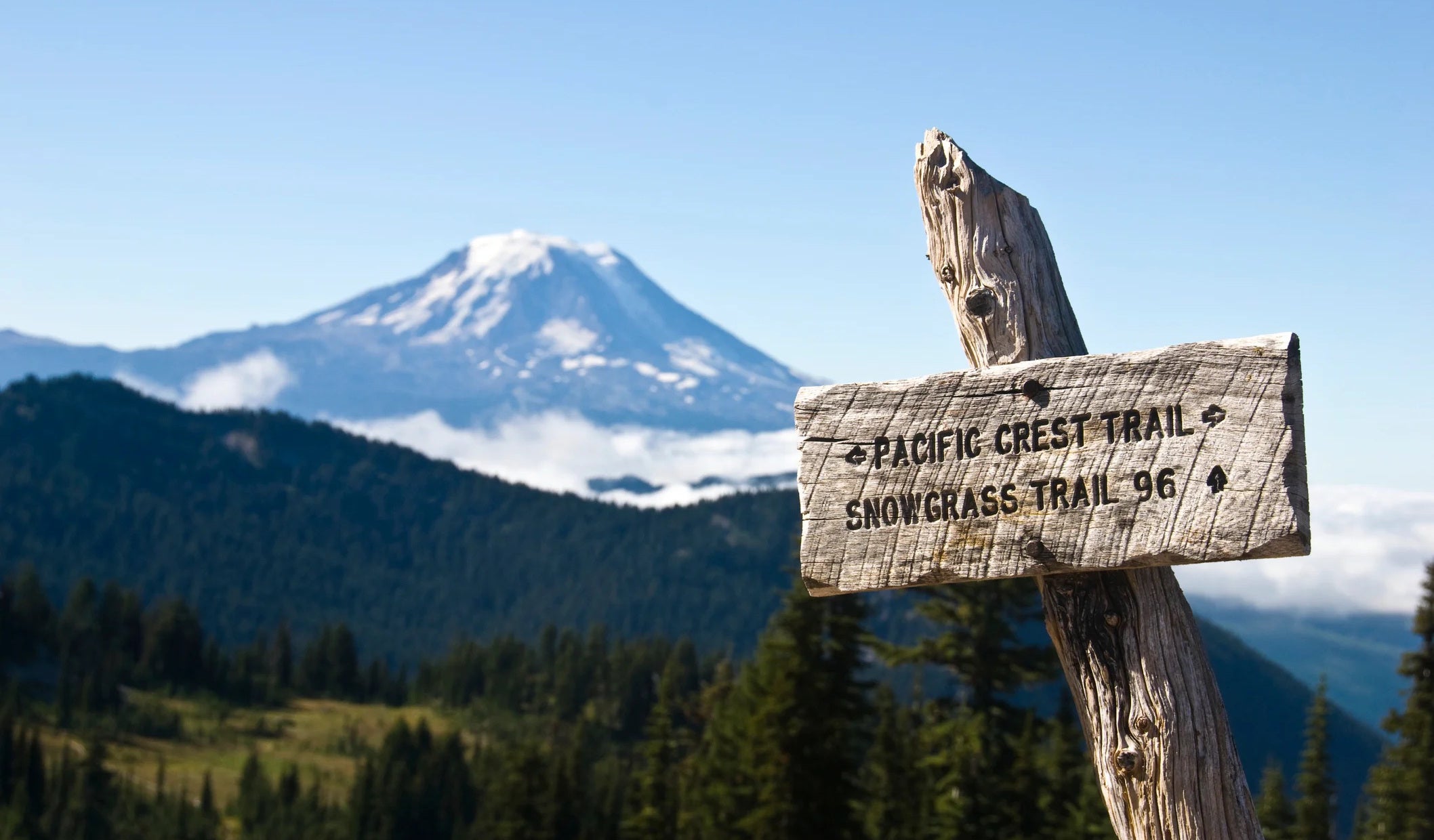
(Photo: RobertCrum/ iStock / Getty Images Plus via Getty Images )
The Pacific Crest Trail, also known as the PCT, is the second-longest of America’s Triple Crown long trails, stretching from Mexico to Canada through the states of California, Oregon, and Washington. Adventurous hikers looking for a challenge will take the high route through the Sierra Nevada and Cascade ranges and witness some of America’s most scenic and varied terrain—from scorching desserts to snowy mountains—along the way. Whether you decide to thru-hike the PCT or enjoy its beauty in sections, here is everything you need to know to prepare for this life-list wilderness adventure.
What Is the Length of the Pacific Crest Trail and Where Does It Start and End?
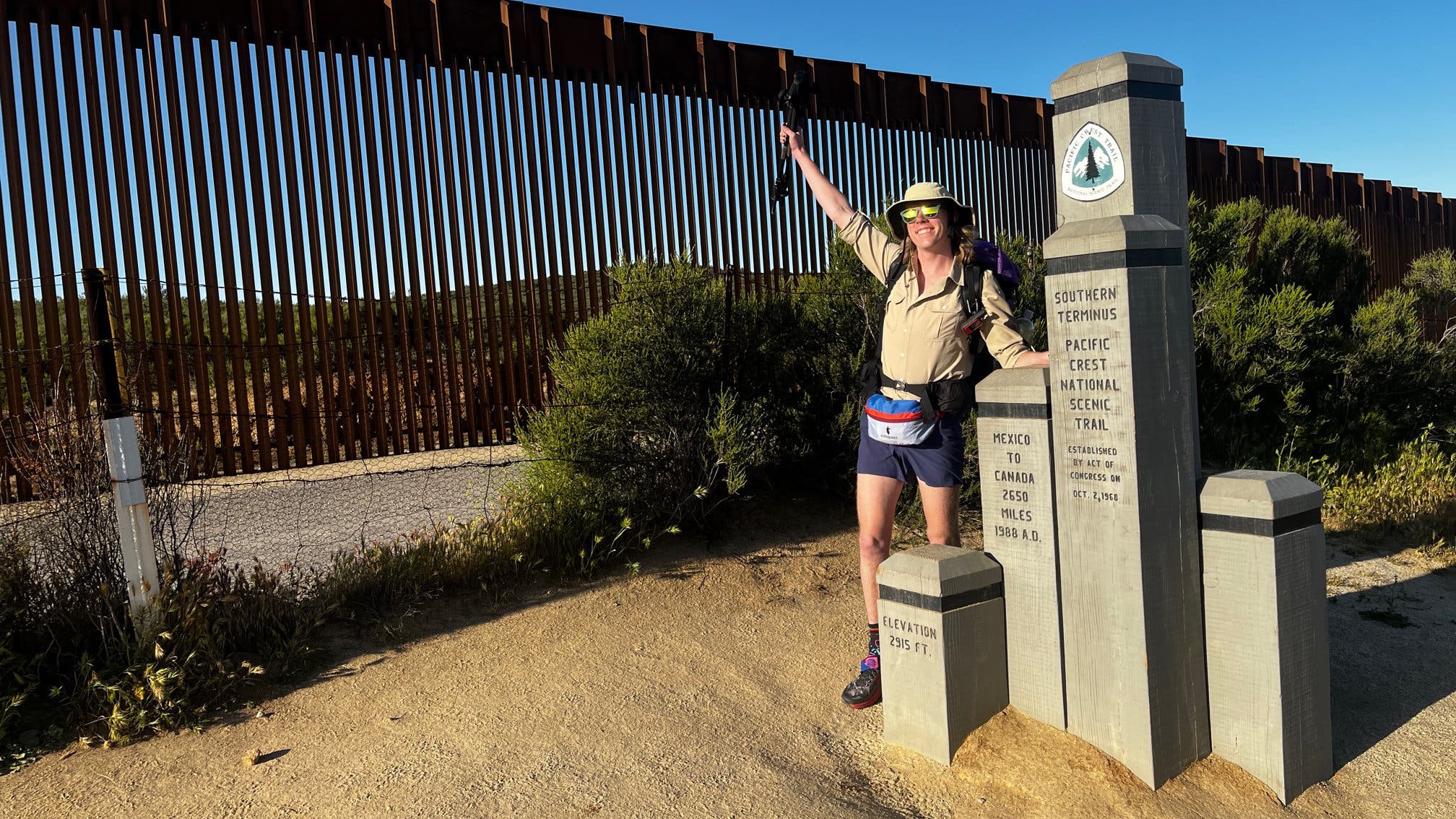
The Pacific Crest Trail is 2,650 miles long (4,265 kilometers. Starting in Campo, a small town on the United States-Mexico border, it goes through California, Oregon, and Washington before reaching its northern terminus at the United States-Canada border in Manning Park, British Columbia.
The trail is divided into 30 sections: 18 sections in California, 7 in Oregon, and 5 in Washington. The average length of each section is 91 miles.
You might find other sources reporting numbers that are slightly lower or higher than 2,650 miles, and there are two reasons for that discrepancy:
- The trail gets rerouted every year to provide better treadway, better scenary, or to move the trail away from threats such as wildfires, which can add or subtract up to 10 miles.
- The trail has only been mapped with consumer-level tools, so the data sets don’t provide a truly accurate length. The Pacific Crest Trail Association thinks that 2,650 miles is the closest accurate measure.
ADVERTISEMENT
What to Expect When Thru-Hiking the PCT
- Obviously, you’re not going to carry all of your supplies and food with you when you start out. In fact, you won’t carry more than about 10 days worth of food at any time during your trek, and you’ll often have much less. Before you leave, you should ship resupply boxes to resupply towns along the way. These boxes include the clothes and gear you’ll need for the next leg of your trip as well as some food items (see resupply strategy below). You will also send yourself resupply boxes loaded with food while you’re on the trail.
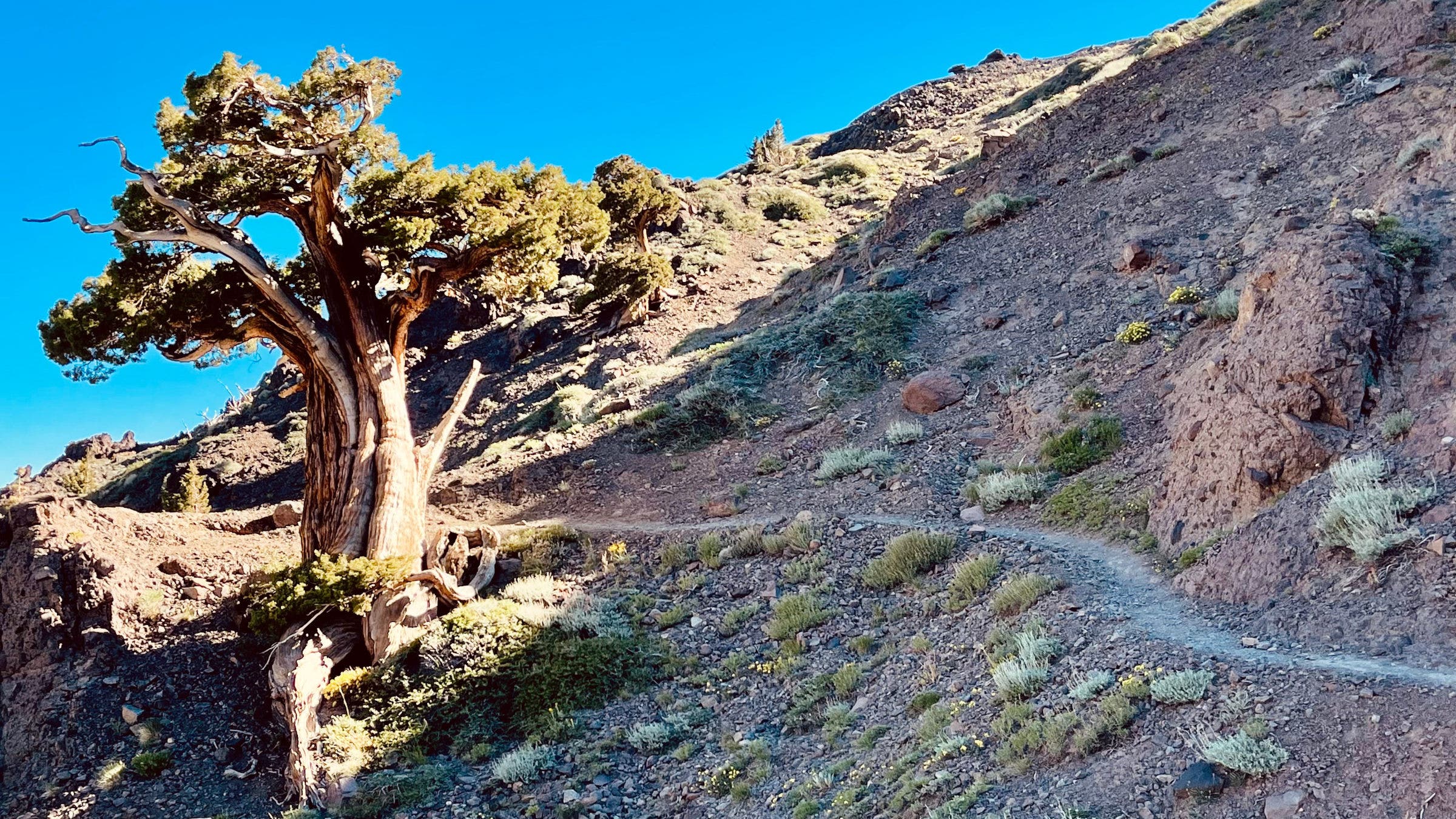
- One month you’ll walk in 110 °F weather (44 °C) and the next you’ll be treading through snow in temperatures under 20 °F (-6 °C).
- You’ll sleep in your tent in the wilderness for the larger part of your thru-hike, but once in a while, you’ll enter towns along the trail and spend a civilized night in a motel or hostel.
- Of all the things to be scared of on the PCT, bears and mountain lions are the least of your worries. Lightning strikes may have you running for cover; bees in Northern California and Oregon may sting you as a reminder that you’re walking through their territory; rattlesnakes make frequent appearances; unyielding bikers might run you over; and butt chafe might strike at any moment. On the other hand, running into bears isn’t common, and mountain lions even less so.
- Once in a while, you’ll travel long stretches (25-30 miles) before encountering a water source. This isn’t only true of desert sections either. The Hat Creek Rim in Northern California is a 30-mile hike between reliable water sources. Fortunately, selfless hikers and local residents, known as “trail angels,” leave unused water jugs in water caches along the trail, which you can use them to refill your bottle. However, don’t rely on these caches: Always carry at least 2 liters of water when going through the desert or through areas without reliable water sources—more in extra-long dry sections. On most parts of the PCT, you will drink from streams.
How Long Does It Take to Hike the Pacific Crest Trail?
Thru-hiking (hiking a trail its entirety in one season) is a long-term commitment. For the average hiker, it takes about 4-6 months. However long you take, plan on finishing before winter’s inhospitable weather strikes.
Hiking anywhere from 10-20 miles a day is the norm, but most people walk faster in the dessert and slower in the snow. Don’t worry if on some days you take a “zero,” or don’t clock any miles at all. To keep you on track with your timeline, forget calculating average miles per day, and instead, set a destination goal (e.g. “I should be in Northern California by June”).
ADVERTISEMENT
Experienced hikers have finished the trail in less than two months. But a speed hike is no easy feat: Those fit few who have finished in under 100 days averaged about 30 miles a day.
How to Prepare for Thru-Hiking the Pacific Crest Trail
Which Direction Should I Travel on the PCT?
Going northbound or southbound is an important choice, because the weather will be starkly different depending on whether you start in Canada or Southern California. You should start in late April if you’re going northbound and late June if you’re going southbound. Map out anticipated weather for each location (state, geographic area, or resupply station). It helps with your resupply strategy, so you’ll know exactly what sort of gear to send yourself on the trail. Keep in mind that 90% of PCT thru-hikers go northbound because the weather and other logistics are less challenging when traveling north.
Do I Need Permits on the PCT and How Do I Apply for Them?
You’ll need three permits. All of these are free and easy to obtain.
- If you’re planning on walking 500 continuous miles or more, then you will need a thru-hiking permit. The official permit information page includes everything you need to know about permits as well as a link to the application.
- Going northbound? Then you will need a permit to enter Canada. Note that it is illegal to enter the U.S. from Canada (though there is no one there to stop you).
- If you’re planning on cooking food or boiling water in California, then you will need a California Fire Permit. All you need to do is take a quick quiz and print it off this website. Keep in mind that even with a permit, campfires are not allowed anywhere in Southern California or other areas facing dangerous fire conditions. Oregon and Washington do not require permits, so boil water to your heart’s content in these areas.
What Is the Ideal Pacific Crest Trail Timeline?
You should plan to complete the hike within 6 months, otherwise you’ll freeze to death (possibly literally) during the colder months. Most people over 10-20 miles a day, with a 16-mile-a-day average. Some days you’ll walk more; some days you won’t walk as much. Create a rough plan of where you’ll be each week and each month, and consider the weather when planning. Keep in mind that once you’re on the trail, your rigid plans will likely derail, and you’ll rely on spontaneity to make it through.
ADVERTISEMENT
Training for an Epic Thru-Hike
Besides training physically for an epic thru-hike, PCT aspirants need to prepare mentally as well. Write down a list of reasons why you’re doing this hike and memorize this list to help you pull through when you’re exhausted, beaten up, and questioning why you subjected yourself to this endeavor in the first place. Read blogs and books written by people who have done thru-hikes before; Wild, by Cheryl Strayed, is the most famous of these, but definitely not the only one.
What Essentials Should I Pack for a PCT Thru-Hike?
In addition to the big-ticket necessities recommended in the Ultimate Gear Packing List, the following items are necessary for every thru-hike.
- A detailed topographic map (the trail is not well-marked, so you may go miles before seeing a sign, and some signs even get stolen or destroyed)
- A compass
- Sun protection, such as sunscreen, sunglasses, and a hat (there are 700 miles of desert)
- A water filter or chemical treatment (Giardia doesn’t play games. Many hikers use the Sawyer Squeeze filter, which is cheap and durable.)
- A headlamp and batteries (even if you don’t plan on hiking at night, you’ll need one for setting up a tent)
- 2 lighters or matches
- Knife
- Duct tape (in case your clothes or tent rips)
- First aid kit
- Toilet paper, toothbrush, and toothpaste
- Phone and phone charger (you’ll get coverage on roughly 70% of the trail and can recharge in towns)
- Ziplock bags and rubber bands (great for stashing things and keeping them from shifting around in your backpack)
- Cash (not every store along the trail takes credit cards)
- Passport and permit to cross the Canadian border.
- A mylar blanket (Lightweight and keeps you well-insulated. Can also double as an SOS signal)
- Ice axe (for trekking through snow)
- Vaseline (Rub it between your thighs, in your groin area, and anywhere else you think you might chafe. It also doubles as a fire starter.)
How Do I Eat on the Trail?
Of all the silly things you could do on this trip (and there will be many silly stories), buying 6 months of food in advance would be the worst. Unless you’ve gone on long thru-hikes before, you won’t know how much you’ll eat, and more importantly, what foods you’ll like eating. You’ll likely get sick of the food you packed and wish you had more variety. Pack snacks and meals for the first leg of your trip, but plan on buying food in resupply towns on the trail, which is less expensive than shipping a box from home. You can also buy food on the trail and ship it to a resupply point further up the trail.
ADVERTISEMENT
Resupply Strategy for Hiking the Pacific Crest Trail
In a survey on resupply strategy conducted by Halfwayanywhere, most hikers recommend sending resupply boxes while on the trail. You can also send half from home and half on the trail. Most people sent an average of 10 resupply boxes, and they recommend sending them to the following resupply stations.
Best PCT Resupply Points:
These are listed from south to north.
- Warner Springs (Desert)
- Kennedy Meadows (Sierra)
- Sierra City (NorCal)
- Crater Lake/Mazama Village Store (Oregon)
- Shelter Cove (Oregon)
- Trout Lake (Washington)
- White Pass (Washington)
- Snoqualmie Pass (Washington)
- Stevens Pass/Skykomish (Washington)
- Stehekin (Washington)
Tip: Because the first leg of your hike will be through desert, you’ll be carrying a lot of water. To cut down on weight, buy food on the trail until you reach the Sierras.
How to Mail Your Food
- Mail Priority. It’s cheap and usually takes 2-3 days.
- Mail either to the post office or to a hotel (hotels charge an extra handling fee). Post offices are recommended as they will automatically hold your package for up to 30 days. All you’ll need is a picture I.D. to pick up your box.
- When mailing to the post office, write your name, write “general delivery,” and write the city, state, and zipcode.
Tip: You can stick a mailing label on a bear can and mail without a box.
What Foods Do PCT Hikers Eat?
The following are general recommendations. These foods are all high in calories, fat, protein, and nutrients and are easy to pack. Note that you will need to eat an additional 2,000 calories a day on top of your normal calorie intake. Most hikers pack:
- Oatmeal packets
- Dried fruits/dehydrated vegetables
- Nuts and seeds
- Beef jerky, tuna, salami
- Cheese
- Tortillas
- Crackers
- Instant noodles/instant rice/instant potatoes
- Peanut or almond butter
- Protein bars
- Olive oil packets
- Electrolyte or protein powder mixes
- Pasta
ADVERTISEMENT
When Should I Start My PCT Thru-Hike?
Consider your health and fitness level when choosing. NOBO thru-hikers should start in late April and SOBO thru-hikers should begin in mid-June or early July for the best chances of successfully completing the entire trek.
Should I Go Northbound or Southbound on the PCT?
Nearly 90% of PCT thru-hikers go northbound. It is recommended to start at the southern terminus and go north for several reasons:
ADVERTISEMENT
If you begin the hike in Canada, you cannot legally enter the U.S. using the Pacific Crest Trail, necessitating extra miles to get to the starting point. Even if you start in Washington at Harts Pass, you will likely run into severe snowy weather for the better part of the journey. There will be snow even if you start in June.
With that said, there are still benefits to hiking southbound. Below are pros and cons for going southbound vs. northbound.
Pros and Cons of Traveling Northbound on the PCT
| PROS | CONS |
| More people on the trail means more opportunities to make friends. | The desert will be crowded and hot when you start in April. |
| The desert terrain is easier to traverse than the Washington mountains, which means that starting south allows you to slowly build up your fitness level so you’ll be more prepared for the difficult trek in the later half of the hike. | If you get to the Sierras too early, you’ll run into high waters and snow. |
| Since there will be more people, you’ll likely get more assistance. NOBO hikers have been known to leave helpful notes for the hikers behind them (e.g. Like a warning about a hornet’s nest to watch out for) . | You will have to rush through Washington to avoid heavy winter snows in the fall. |
Pros and Cons of Traveling Southbound on the PCT
| PROS | CONS |
| It’s a road less travelled, so you’ll see fewer people and be better able to enjoy nature. | The trails are marked better for northbounders (NOBOs), so it will be more difficult to navigate. |
| If you start in June, by the the time you reach the deserts of Southern California in the fall, it will be relatively cooler. | Water supply will likely be scarce when you arrive in the desert during the fall. |
| The southern terminus is accessible by car and closer to civilization, so you could Uber to an airport and fly home if you felt like doing so. | Late snowfall in Washington and Oregon means SOBO hikers face additional obstacles. |
What About Flip-Flops?
An increasing number of hikers are choosing to flip-flop—to begin the trail at a midpoint, hike in one direction, then return later in the season to complete sections they skipped. Flip-flopping has a few advantages, especially in a heavy snow year when mountain passes may be difficult to cross and river fords can be hazardous or impassible, or in bad fire years when blazes may force reroutes. It lets hikers enjoy the best conditions instead of pushing through difficult sections.
Note that PCT long-distance hiking permits require hikers to traverse the Southern Sierra—from Kennedy Meadows South, mile 702, to Sonora Pass, mile 1017—nonstop, in 35 days or less. So if you’re planning on a more creative route, make sure to account for that.
ADVERTISEMENT
A Guide to Hiking the Pacific Crest Trail in Sections
Here are the PCT’s 30 sections. You can hike just a few sections, or if you’re planning on thru-hiking, this list can serve as your itinerary.
California Sections:
- CA Section A: Campo to Warner Springs
- CA Section B: Warner Springs to Highway 10 (near Cabazon)
- CA Section C: Highway 10 to Highway 15 (Cajon Pass)
- CA Section D: Highway 15 to Agua Dulce
- CA Section E: Agua Dulce to Tehachapi Pass
- CA Section F: Tehachapi Pass to Walker Pass
- CA Section G: Walker Pass to Crabtree Meadow (near Mt Whitney)
- CA Section H: Crabtree Meadow to Tuolumne Meadows (Yosemite)
- CA Section I: Tuolumne Meadows to Sonora Pass
- CA Section J: Sonora Pass to Echo Lake
- CA Section K: Echo Lake to Highway 80 (Donner Summit)
- CA Section L: Highway 80 to Highway 49 (near Sierra City)
- CA Section M: Highway 49 to Belden
- CA Section N: Belden to Burney Falls State park
- CA Section O: Burney Falls State Park to Highway 5 (near Castle Crag)
- CA Section P: Highway 5 to Etna Summit
- CA Section Q: Etna Summit to Seiad Valley
- CA Section R: Seiad Valley, CA to Highway 5 (near Ashland, OR)
Oregon Sections
- OR Section A: Seiad Valley, CA to Highway 5 (near Ashland, OR)
- OR Section B: Highway 5 to Highway 140 (near Fish Lake)
- OR Section C: Highway 140 to Highway 138 (near Cascade Crest)
- OR Section D: Highway 138 to Highway 58 (near Willamette Pass)
- OR Section E: Highway 58 to Highway 242 (McKenzie Pass)
- OR Section F: Highway 242 to Highway 35 (near Barlow Pass)
- OR Section G: Highway 35 to Cascade Locks
Washington Sections
- WA Section A: Cascade Locks to Highway 12 (at White Pass)
- WA Section B: Highway 12 to Snoqualmie Pass
- WA Section C: Snoqualmie Pass to Stevens Pass
- WA Section D: Stevens Pass to Rainy Pass
- WA Section E: Rainy Pass to Manning Park, BC
How Much Does It Cost to Do the Pacific Crest Trail?
If you think grazing on ramen out in the wilderness with no electricity sounds like a cheap way to spend 6 months, then you are wildly mistaken. The average cost of a PCT thru-hike, including gear, food/resupply, and other end-to-end trail expenses, is roughly $8,000 per person for an average thru-hike. That said, it’s not uncommon to hear stories of some people spending close to $12,000. If you plan and budget ahead of your trip, you can avoid becoming a financial cautionary tale. Keep in mind too that you’re also losing 5-6 months of income from not working. Make sure you have enough saved up to re-enter civilization and start paying bills again.
All New Gear Estimate: ~ $2,000
If you already have gear or you’re just looking to upgrade a few items, then you likely won’t spend much in this category. Buying everything brand new, however, will set you back $2,000 to $4,000. That may sound like a lot, but it really isn’t because you’re making a long-term investment. If you’re going to splurge on anything for this trip, then this is the category to do it. Invest in quality, lightweight gear; you’ll regret it if you try to muscle through with heavy equipment.
ADVERTISEMENT
Trail Expenses a.k.a Food: ~ $2,000 to $3000
This category includes the cost of food and the cost of shipping resupply boxes. Most hikers report spending an average of $10/day on food, but some spend more. This averages to approximately $300 a month on trail food, so the total cost of trail expenses for most hikers is about $2,000.
Town Time Expenses: ~ $50 to $100 a day
Time spent in towns that you pass through along the way will be the most expensive part of your trip. You could skip the towns altogether, but the temptation of sleeping in a hotel, eating at restaurants, sampling the local beers, and using an actual toilet will be hard to resist.
How to Save Money
Don’t skimp on gear and resupply. To save money, try to resist going into every town. Unless you and your entire group of buddies are disciplined and frugal, spending time in town becomes costly. It only takes one spontaneous friend to lead your group down the regrettable path of frivolous spending. To read about how one thru-hiker budgeted her trip, check out Liz “Snorkel” Thomas’s article about how much a thru-hike costs.
ADVERTISEMENT
Can You Hike the Pacific Crest Trail With a Dog?
Dogs are allowed on most parts of the Pacific Crest Trail, but before you take your canine buddy along, consult our guide on safely backpacking with dogs to make sure the experience is enjoyable for both you and your pal.
Remember, you are sharing the trail with other people. Dealing with dog poop is an additional inconvenience that could slow you down, plus your dog might run into conflicts with wild animals. Thru-hiking with a dog is not allowed because some national parks along the route completely ban dogs on trails.
Tips to Survive a PCT Thru-Hike
- Tell a designated party at home when and where they can expect to hear from you in case of an emergency.
- To help your body acclimate to high altitudes in the Sierras, sleep low and climb high. Sleeping at low altitudes helps you body recover so you can tackle high altitudes the next day. Go slow if you have to and remember to hydrate.
- Stretching is crucial to avoid injuries, aches, and pain. Stretch even if you’re tired. Your body will thank you for it.
- Pay attention to your pack weight. Your joints will thank you.
- You will go through 6 or 7 pairs of shoes, and your feet will swell up and grow as you walk. Let your support person at home know what type of shoe you like, or order new pairs yourself on your phone.
- If you’re going NOBO, wear shoes that are one size larger than you normally wear. Your feet will swell in the desert.
- Leave no trace! Carry a bag with you for trash.
- Carry 1 liter of water for every 5 miles you hike in the desert.
- Learn how to use an ice axe, and have one shipped to you at Kennedy Meadows.
How Many People Have Done the Whole Pacific Crest Trail?
According to the Pacific Crest Trail Association website, 9,421 people have completed the the PCT as of 2023, and 112 of those people did it more than once. These numbers are based on a self-reported honor system, so it may not be a fully accurate measure of the exact number of people who have completed the hike. Check the site for more up-to-date tallies of PCT thru-hikers as the number increases every year.
ADVERTISEMENT
Interesting Facts About the Pacific Crest Trail
- The PCT was designated a National Scenic Trail in 1968 but was not officially finished until 1993. This trail passes through seven national parks and 25 national forests.
- 54% of the trail that is on federal land is located in designated wilderness.
Between 50 – 60% of people who attempt a thru-hike of the PCT fail to complete the entire hike due to fatigue, illness/injury, running out of money, or having a negative mindset. - The highest point on the PCT is 13,153 feet (4,009 miles) at Forester Pass.
Together, the Pacific Crest Trail, the Appalachian Trail, and the Continental Divide Trail, are known as the Triple Crown of long-distance hiking in the United States. Someone who successfully thru-hikes all three trails is known as a Triple Crowner.