Published May 2, 2025 11:15AM
If you buy through our links, we may earn an affiliate commission. This supports our mission to get more people active and outside.Learn about Outside Online's affiliate link policy
When Do I Need an Ice Axe for Hiking?
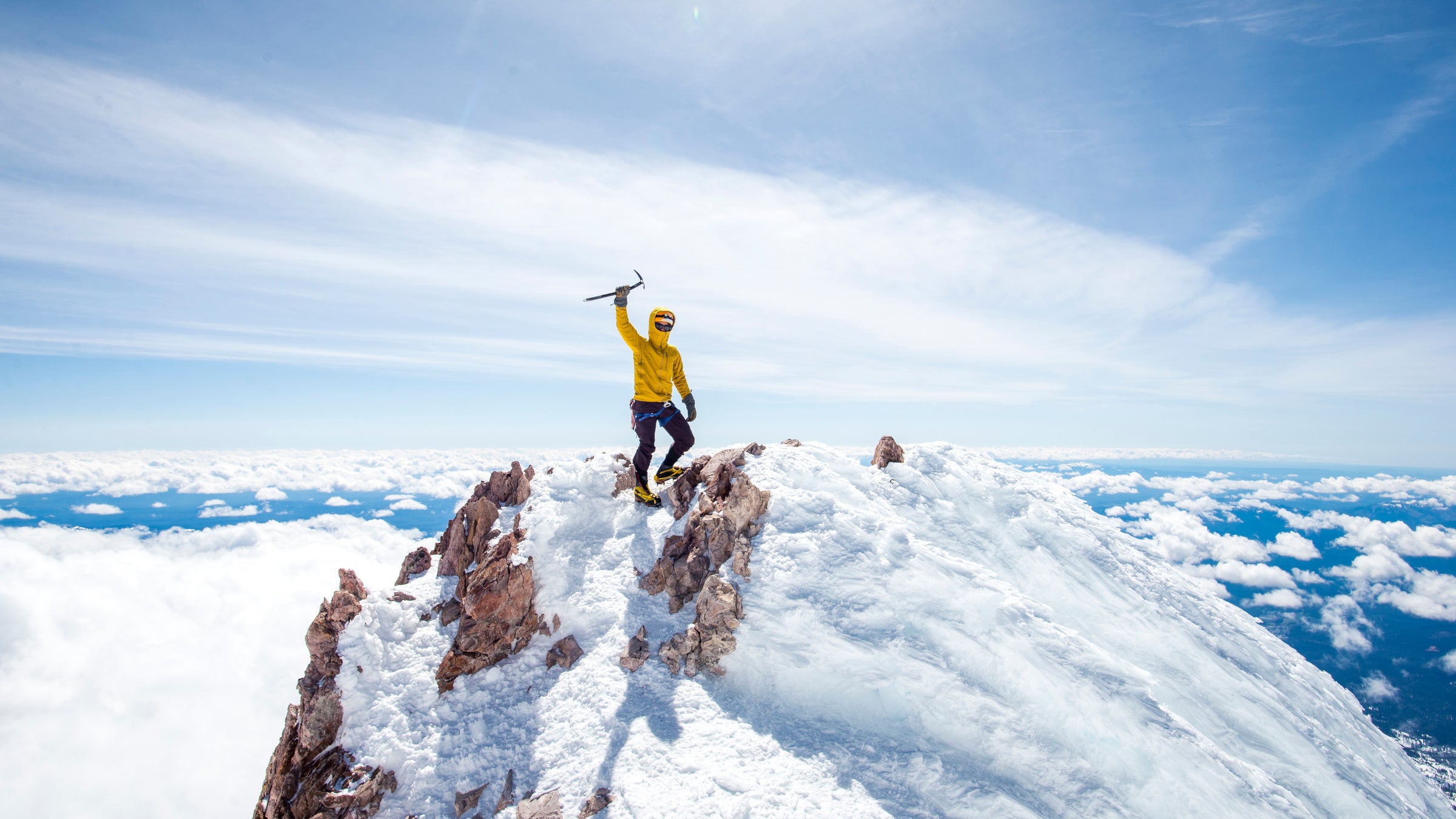
When you're traveling on firm snow, an ice axe is an essential piece of gear. A certified mountain guide tells us why.
(Photo: Brent Doscher / Aurora Photos via Getty Images)
Ready to take your hiking beyond the dirt trail? For technical snow and ice travel on tall peaks, lingering snow on high passes, or glacier travel, an ice axe is a crucial piece of gear. Ice axes serve numerous purposes, from providing stability on snowy ascents to arresting a slide in the case of a fall. Sometimes, however, it’s hard to tell exactly what conditions necessitate the extra weight. Those who choose to leave the axe at home could put themselves in unnecessary danger when a snowy hike turns into an accelerating slide down the mountain. When do you need an ice axe? Ryan Huetter, an AMGA/IFMGA-certified mountain guide working in the Sierra Nevada, shares his advice.
“Ultimately, if snow conditions are firm enough that if a slip occurs it can turn into a slide, then we should be prepared to arrest that fall with an ice axe,” he says. “Though many see the use of an ice axe as being more closely connected with climbing steep slopes or ice, even a relatively low angle snow slope can result in long falls if the snow is firm.”
Depending on where you are, you can encounter firm snow throughout the year. Even just a snowy section a couple feet long could pose a threat to hikers. Backpackers on trails with snow and ice, especially those without a well-trodden bootpack, should consider packing a lightweight aluminum ice axe. Need a gear compromise? Huetter recommends the Black Diamond Whippet, a removable ice axe pick that attaches to a trekking or ski pole.
When deciding whether you need an ice axe, consider the time of day when you’ll encounter snowy conditions. If you’re hiking later in the day after the sun has softened the snow, you might only need a pole for protection. But, “if it is firm in the morning or if weather is keeping the snow from softening,” pack an ice axe, Huetter says.
ADVERTISEMENT
Owning the gear is one thing, but knowing how to use it is even more important. “In the wrong hands, an ice axe may be more of a hazard than a help,” Huetter says. “Now you are holding a very sharp metal object in your hands that could cause a lot of damage if you fell with it in the wrong way.”
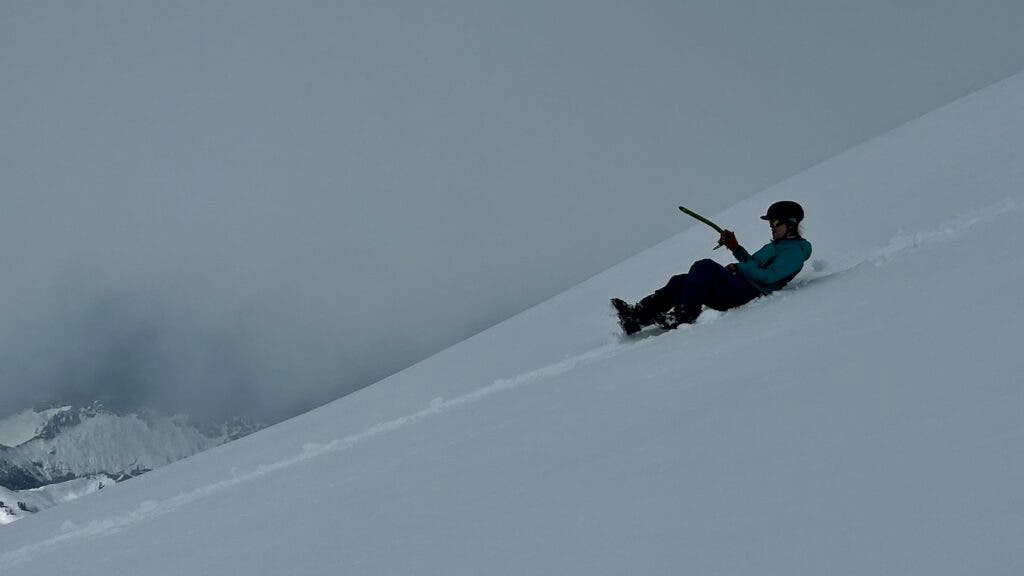
Practice carrying your ice axe appropriately while hiking and self-arrest. It’s useful to simulate different types of falls in a controlled environment to lock in self-arrest muscle memory. Many guide services, such as Huetter’s Sierra Mountain Guides offer courses with early-season hikers in mind.
If you find yourself in a slide without proper gear, you’ll need to act fast. Before gaining momentum, slow your slide with a hiking pole, your elbow, or if you’re able to grab one, a stick or a small rock. As you begin to slow, kick your toes into the snow so that you come to a stop. However, once you start accelerating, an ice axe is the most effective tool to stop your slide.
