Updated February 9, 2026 11:19AM
Yellowstone Just Had Its First Grizzly Sighting of the Year. Time to Brush Up on Your Bear Safety.
January's bear sighting is one of the earliest Yellowstone National Park has had on record. Here's how to stay bear safe, even in the winter.
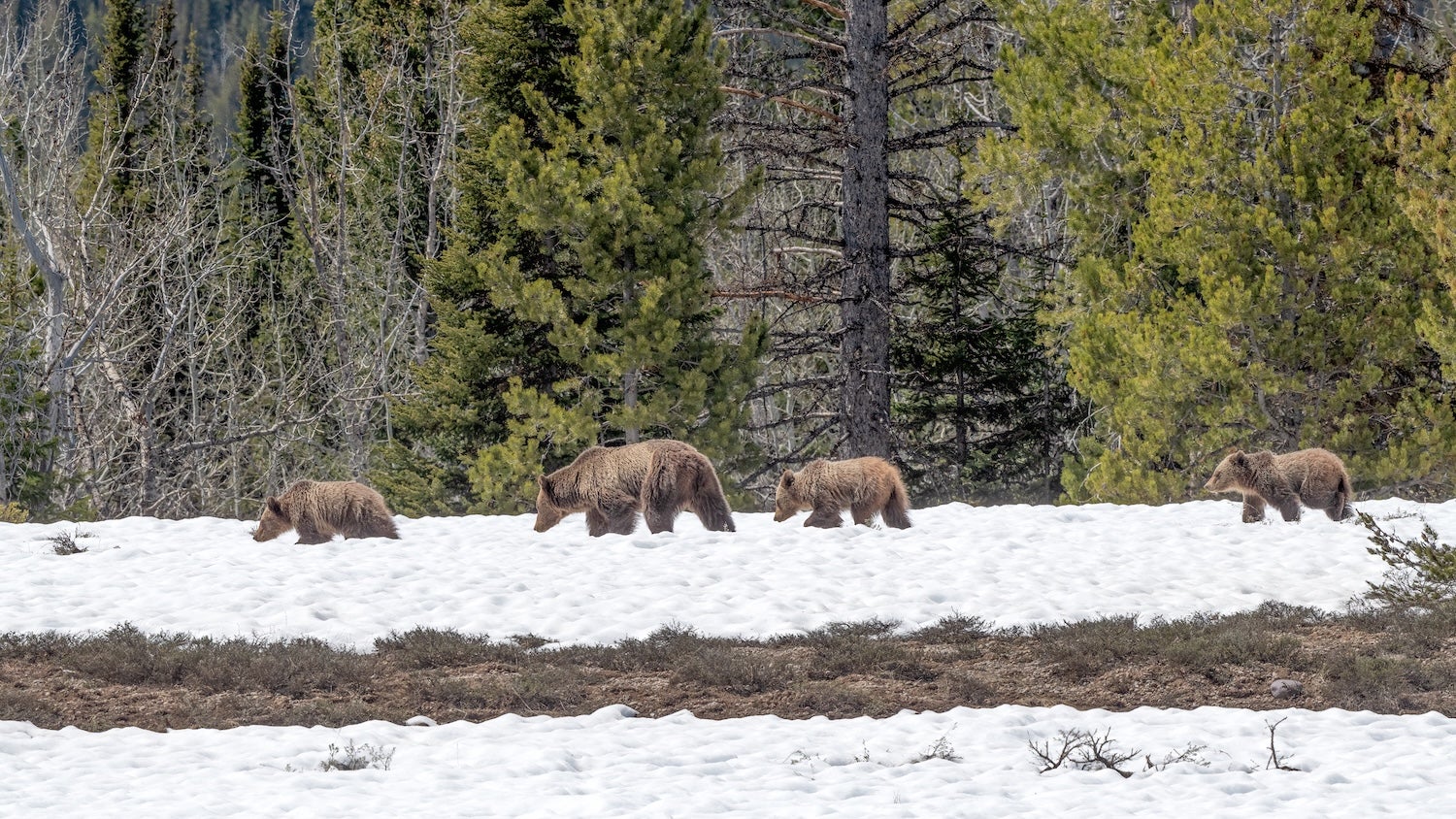
(Photo: John Morrison via Getty Images)
Earlier this month, Punxsutawney Phil saw his shadow and soothsaid six more weeks of winter. However, days before, there was another sign that actually indicated the onset of spring: the first Yellowstone National Park grizzly sighting of the year. It’s unclear whether this bear had briefly roused from its midwinter torpor or whether it had risen early. Either way, bear biologist Frank van Manen told Cowboy State Daily that “this would be one of the earliest sightings on record.” (Generally, this area’s early risers emerge from their torpor in late February or March.) Indeed, there’s reason to believe that higher-than-average temperatures throughout much of the Rockies may lead bears to wake up early in 2026, as they did in Colorado last year.
Some hikers cast off the fourth season as one that’s entirely bear-free. That’s not true; you still need to follow many of the same bear-safety precautions in winter as you would the rest of the year. Climate change and increasing urbanization can disrupt a bear’s hibernation cycle and increase the chance of a wintertime bear encounter. Do you know how to stay bear safe? Throughout the years, we at Backpacker have debated bear hang techniques, busted bear myths, and written about much more when it comes to ursines. Refresh your knowledge with these articles below.
Bear Spray Could Save Your Life. Here’s How to Use it Right.
Bear spray is perhaps the most essential piece of gear for anyone in grizzly country, and luckily it doesn’t require precise aim to work. You still need to know how to use it. Here’s a demonstration video from Montana-based adventurer, experienced hunter, and Outside writer Wes Siler.
Pro Tip: Bear Spray Goes on the Bear, Not on You
Believe it or not, but some have mistakenly interpreted bear spray’s instructions as a repellent that goes on like bug spray. That’s a caustic mistake that you won’t want to make. Need an explanation? Here’s why.
ADVERTISEMENT
9 Bear Safety Tips From a Bear Biologist
When it comes to avoiding human-bear encounters, it’s best to listen to biologist Tom Smith. He estimates he’s seen hundreds of bruins of each species in his over 20 years in the field, and his academic papers have helped backpackers stay safe in the bear safety.
13 Myths About Bears That No One Should Believe
Bears can’t run downhill. A bear that has tasted human food won’t eat wild food anymore. Bears have poor eyesight. Lies, lies, lies. Here’s the truth.
Is It Time to Retire the Bear Hang for Good?
Many experts are starting to make the argument that it’s time to stop storing food through a bear hang: “You cannot prevent a bear from reaching food that is hung up; you can only make it difficult,” says Scott Wilkinson of the Pacific Crest Trail Association. Here are some alternatives to the bear hang.
ADVERTISEMENT
How to Hang a Bear Bag
Committed to the bear hang life? Here’s a video demonstration on how to do it right.
Grizzly No. 399’s Death Was Preventable. Here’s What Went Wrong
I can’t write about bears in Yellowstone without paying homage to the park’s fallen queen bruin. When driving in bear country, pay attention to the animals that might be lurking on the edge of the road.
Bear Hibernation: The Science of Our Furry Neighbors’ Winter Naps
This time of the year, most bears should be hibernating. Here’s why they need to sleep to survive.
