Updated July 7, 2025 02:31PM
How to Reach Flow State While Hiking
Follow these tips to help you get into the zone and unlock your true potential.
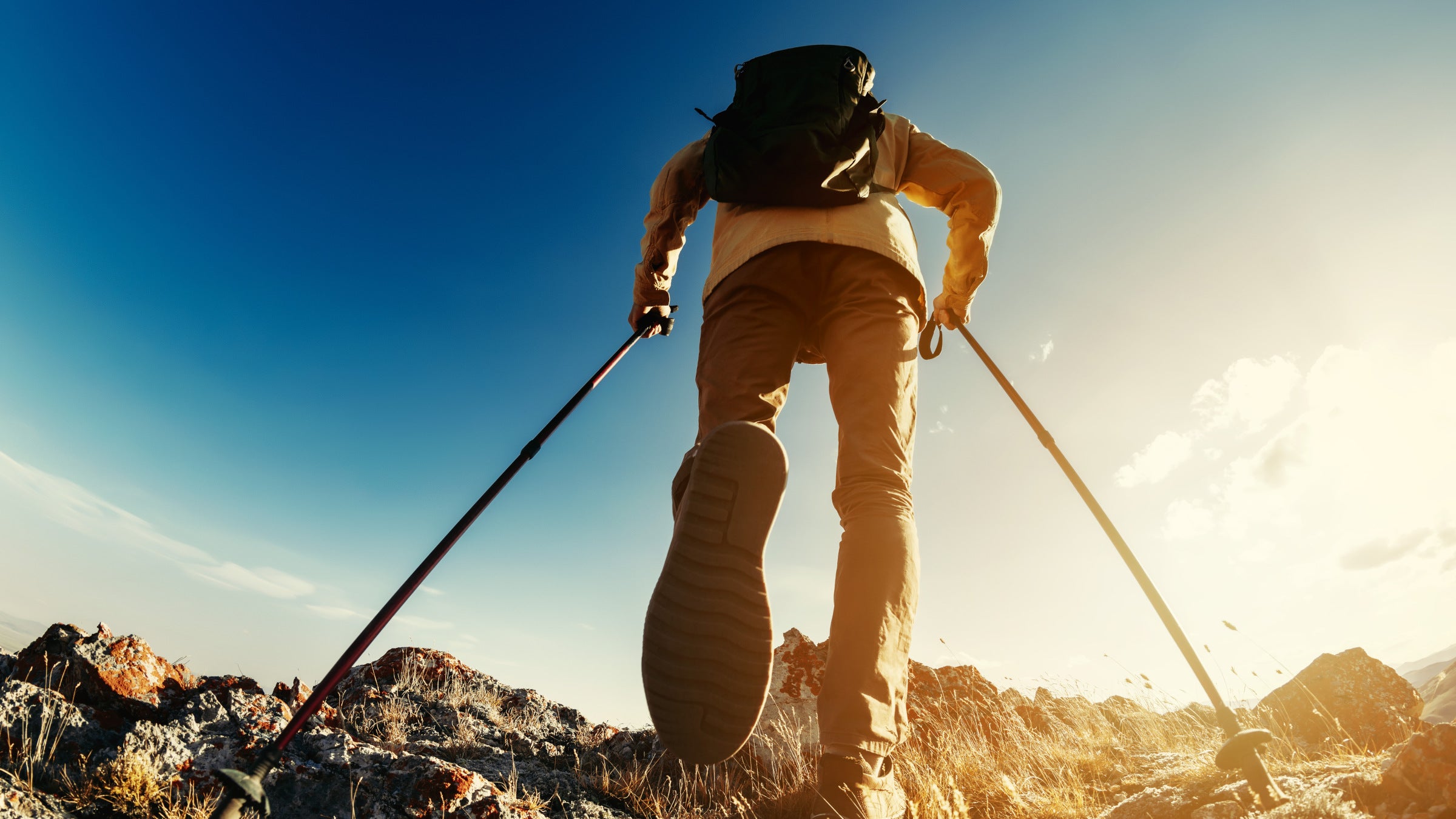
(Photo: molchanovdmitry / iStock / Getty Images Plus via Getty Images)
The hill was called Jacob’s Ladder, and I’d been dreading it all morning. Notorious among Appalachian Trail thru-hikers, the Ladder is a section of the trail in western North Carolina that ascends more than 600 feet in about a half-mile. When I set out to do it during a backpacking trip in college, I was a fairly new hiker. The thought of the hill made me nervous. The sight of it made me want to pee my pants.
When my friends and I reached the base of the Ladder, I craned my neck to see the top—and felt my heart drop through my feet. The trail lurched straight upward. The slope was slick with fallen leaves. There wasn’t a switchback in sight.
After a quick huddle, we decided to use brute-force tactics: We’d bust out the climb in one push—no breaks until the top.
Desperate not to hold the group back, I tightened my pack straps, put my head down, and started grinding uphill. Then, something bizarre happened.
About a quarter of the way up the slope, I felt a switch flip in my brain. My vision narrowed until all I could see was the trail in front of me. Time seemed to slow down. My mind had gone still, a sort of glassy calm like the surface of a pond at dawn: not a thought, not a ripple. But the biggest change was in my perception of pain. The burning in my muscles stopped being a sensation I was desperate to escape, and instead became a gentle warmth that seemed to swallow me up.
ADVERTISEMENT
When I got to the top of the hill, I blinked and looked around. What had just happened?
States of Flow
I’d just experienced what psychologist Mihaly Csikszentmihalyi calls a state of flow. The first to coin the term and one of the first to study flow states in-depth, Csikszentmihalyi based his research on the Zen-like states that artists, athletes, and musicians slip into when they reach peak performance.
Flow is what happens when you do something that’s so engaging that you forget to eat or go to the bathroom. In some instances, it can feel like time has slowed down. In others, you look up from your task to realize hours have gone by. States of flow are often associated with laser-sharp focus, creative thinking, and spurts of superhuman productivity. Getting into flow can help you think outside the box and push your limits to previously unthinkable levels.
ADVERTISEMENT
As a side bonus, it also feels like being on drugs. When you drop into a flow state, your brain triggers a rush of dopamine, serotonin, and other feel-good neurotransmitters. One of those chemicals is anandamide, which is structurally similar to THC—and has a similar effect on the brain. Flow also releases endorphins, which are natural painkillers. Basically, when you hit flow, your brain catapults you into a rainbow ball pit of neurochemical bliss.
When I first started learned about flow, I assumed I’d have to be an artist, ballerina, or NBA player to experience it. But recent research has demonstrated that flow is just as achievable for endurance pursuits like running and hiking. In fact, many endurance athletes cite flow as the key to more enjoyable training and better performance. So, if you’re prepping for a big backpacking trip or summit push, mastering flow could give you an edge—both during your shakedown hikes and on the day of your objective.
Can You Force Flow?
The trouble is that reaching this state is a bit of a tightrope walk. Csikszentmihalyi describes flow as the perfect match between level of challenge and level of skill: A task has to be challenging enough that it demands all your focus, but not so challenging that it’s beyond your skill level to complete. If a task is too difficult, frustration sets in. That’s counterproductive. Take it from me: When you’re a raging ball of anxiety, it’s pretty hard to flow.
ADVERTISEMENT
So what can help you hit flow? Let’s go back to that earlier example. When I climbed Jacob’s Ladder in college, the conditions were spot-on: I was doing an activity I loved, I was working on a task that challenged me, I was experiencing something new and novel, I had a clear goal in mind, and I was with supportive friends who were performing at a similar level. All these conditions helped create a perfect balance between my sense of my own skill level and my sense of being challenged.
The good news is that, while you can’t force flow, you can create conditions that make flow more likely.
8 Ways to Induce Flow on the Trail
According to science (and my own experience), here are some of the best ways to reliably reach a state of flow while hiking.
- Give yourself plenty of time. It’s hard to flow when you’re time-stressed. In his book, flow state expert Steven Kotler recommends allotting at least 90 minutes to do your flow activity of choice. That gives you plenty of time to get into—and out of—a flow state without worrying about having to be somewhere.
- Pick the right time. Different people are more focused at different times of day. If you usually do your best work in the morning, schedule your hike for then. The sharper your mind, the easier it will be to get into flow state.
- Dial in your challenge level. Find a pace that’s challenging but doesn’t leave you redlining. According to researcher David Raichlen, the brain activity associated with flow states peaks around 70 to 80 percent of maximum heart rate. So, push the pace a bit, but don’t get close to your max.
- Hike at altitude. Some research suggests that the body releases more feel-good neurotransmitters at higher altitudes. If you live near the mountains, try getting higher up.
- Get a change of scenery. When you do the same tired lap around your neighborhood, your body lapses into autopilot, leaving your mind to wander. Seek out novel terrain or scenery to help hold your focus.
- Avoid pre-hike social media. Internet scrolling—whether it’s on social media or your favorite news site—can send your brain into overdrive. Try switching off your phone for at least two hours before hiking and keep it in airplane mode while you’re out.
- Choose a goal. Czikszentmihalyi writes that to reach flow, you have to have a clear goal and a way to mark progress toward that goal. If there’s a lake or summit within striking distance, declare that your finish line. If you’re doing a loop, give yourself a time target that’s just within reach.
- Pick the right tunes. Listening to music while exercising is one of the best ways to experience flow. Some experts recommend limiting distraction by choosing music without lyrics, but I find that anything with a steady beat and some good energy can help me find my rhythm. If it’s a song you can’t help but dance to, it can probably get you in the right mindset to flow.
