Updated February 23, 2024 11:31AM
Got a Partially-Filled Fuel Canister? Here's How to Measure It.
No more running out of gas in the middle of cooking with these methods.
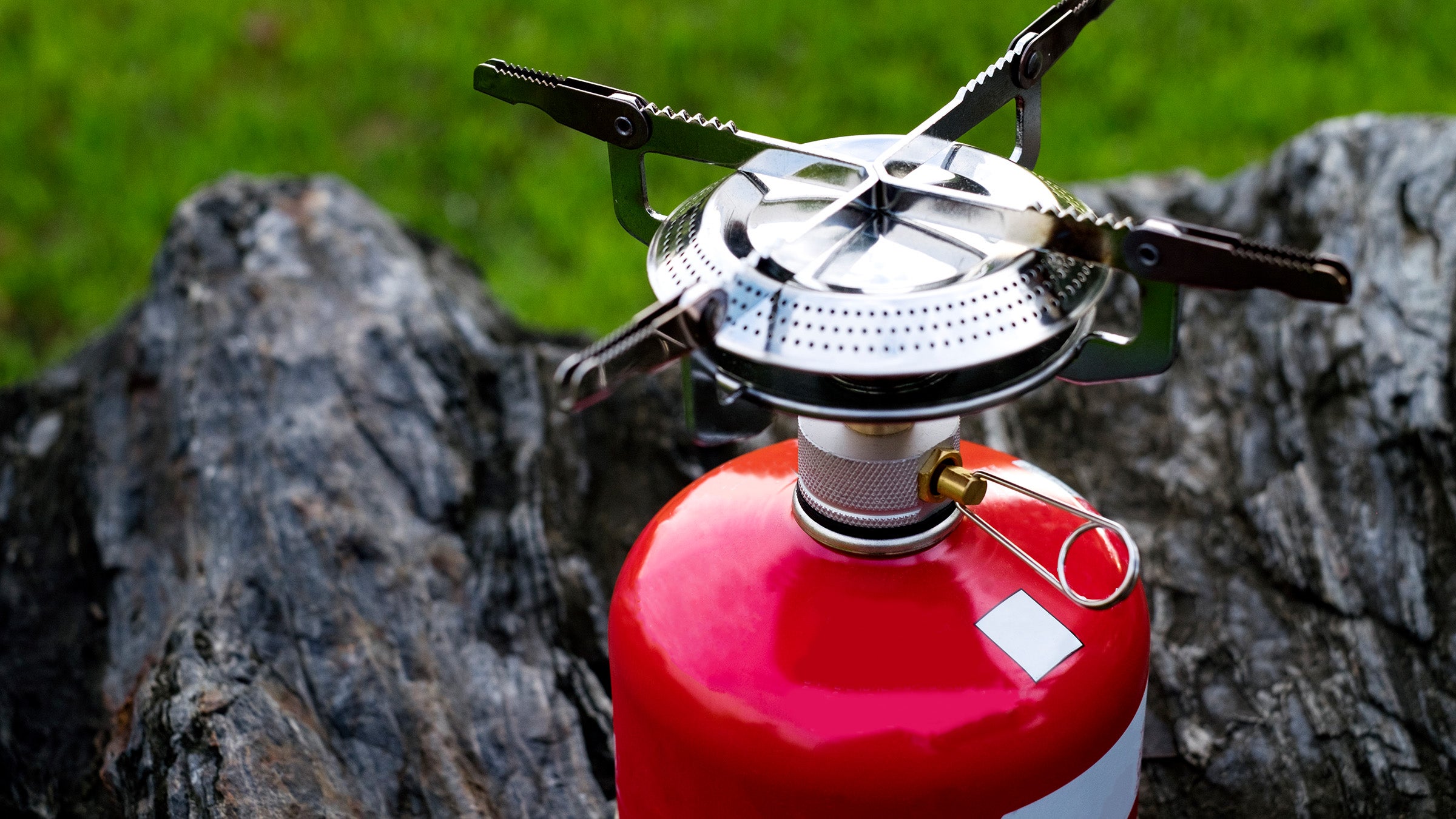
(Photo: PichitchaiJampasri / iStock / Getty Images Plus)
It’s an age-old problem for backpackers: You’re packing for a trip, sorting through a bin of partially-empty fuel canisters and wondering how much you need to pack. There’s nothing worse than running out of fuel before your macaroni is al dente, but no one wants to weigh down their packs with extra canisters. Measuring just how much fuel remains in a used canister is easier than you think, and can save you headache and guesswork on the trail. Never be caught with a sputtering stove again with these tips.
Understanding Your Fuel Needs
Most backpackers use fuel canisters in sizes of roughly 3.5-4 oz, 8 oz, and 16 oz. While various brands sell these canisters, the sizes are standard (give or take a few grams) and the following methods are applicable for whatever brand you use.
Knowing how much fuel you have is only useful if you understand how much fuel you need for your trip. Without knowing how long a half-full canister will last, it’s pointless to measure your fuel in the first place. Consider the following factors that influence burn time:
- Temperature: In cold weather, your fuel will have to work harder to run your stove and boil water. Lower temps cause the pressure in a canister to drop—that’s why we recommend using liquid fuel stoves for winter adventures where you’ll consistently be operating below freezing. The following guide is for canister fuel only, not liquid fuel.
- Wind: A flickering flame means you’ll have to run your stove longer to properly heat your food. Pack extra fuel if you know you’ll encounter windy conditions on your hike. You can improve your stove’s efficiency by using a windblock.
- Altitude: Water’s boiling point lowers as elevation increases, meaning it will boil faster the higher you go. The same isn’t true for cooking times of food, however, which cooks more slowly at altitude.
- Usage: Melting snow takes more fuel than just boiling water, and cooking an elaborate hot meal is less efficient than boiling water for the freeze-dried stuff. Consider how you plan to use your stove on a backpacking trip and go from there.
- Stove efficiency: All backpacking stoves are different, and some take longer to boil water or burn through a certain amount of fuel than others. Check your manufacturer for information on how much fuel you need to boil water with your setup.
If you want to get precise with your fuel needs, calculate how much water you’ll need to boil over the course of your trip (it’s a good idea to factor in a few extra liters). Compare this with your stove’s boil time (you can time how long it takes to boil a liter of water, or look it up) to see how long you’ll be running your stove over the duration of your trip. Then, look up your stove’s burn time on the manufacturer’s website–this will tell you just how long your stove can run on a fuel canister of various sizes. Now, compare the first figure with your stove’s burn time to find out precisely how much fuel you’ll need.
Conducting an at-home test can give you a better sense of your stove’s burn and boil times, but isn’t necessary. The more you use it in the field, the better sense you’ll have of your fuel needs.
Most backpackers don’t need or want to be so exact when planning how much fuel to pack for a weekend backpacking trip. If you’re thru-hiking, or simply want to optimize the weight on your back, it can be useful to plan your fuel needs to a T. Otherwise, you can estimate with minimal effort. For modern stoves, an 8 oz canister is sufficient for two people over a weekend backpacking trip, with fuel to spare. When in doubt, pack extra.
ADVERTISEMENT
Measuring Your Fuel Supply
Now that you know how much fuel you need, you can see how much is left in those used canisters.
Method 1: Use a Fuel Gauge
Some stove and fuel manufacturers like Jetboil and Coleman sell purpose-made portable scales that will tell you just how much gas is left in your canister with a digital readout. These products are affordable and foolproof, making them a good option for hikers who want the fastest, most accurate information about a canister’s fuel content. However, a specialized scale isn’t necessary for hikers who don’t mind putting in just a few minutes of time with items they already have at home.
Method 2: Use a Kitchen Scale
Some simple arithmetic can help you estimate how much fuel remains in a canister with almost as much accuracy as a purpose-made scale. There are a few additional steps, but this method is doable with a basic kitchen tool.
- Calculate the weight of an empty canister. You can do this by subtracting the net weight listed on the canister from the gross weight, or weighing an empty canister you have kicking around.
- Weigh your partially filled canister. Subtract the weight of an empty canister to determine the weight of the remaining fuel. Comparing this to the listed net weight will tell you just how full it is. Considering your boil and burn times, you should be able to determine if this is enough fuel for your trip.
ADVERTISEMENT
Method 3: The Float Test
If your home cooking setup lacks a digital scale, or you want to measure your fuel stash while in the backcountry, this method is a good alternative. While it’s less precise than using a scale, you can do this anywhere there’s water.
Place your canister in a pot of water, making sure to burp any air bubbles from underneath. An empty canister will float higher, with more volume above the surface of the water. A more full canister will sink lower in the water.
Some canisters, like those from MSR, have float graphics printed right on the canister, providing a visual reference for estimating fuel content. But this method works for any canister, graphics or not.
You can even draw your own scale using a permanent marker before heading out on your trip. You’ll need a full canister, an empty canister, and the one you plan to use. Place the full canister in a pot of water. Mark where the water line hits the canister and label this line “full.” Repeat the process with the empty canister and mark the water line “empty.” Transfer the height of these two marks to the canister you plan to use. When you place this canister in water, you can observe where the water line sits relative to empty and full, allowing you to approximate the amount of fuel inside.
