Published March 20, 2023 01:46PM
Want To Hike Better? You Need To Breathe Better
Are you in good shape but still struggling with steep hikes? The culprit could be how you're breathing.
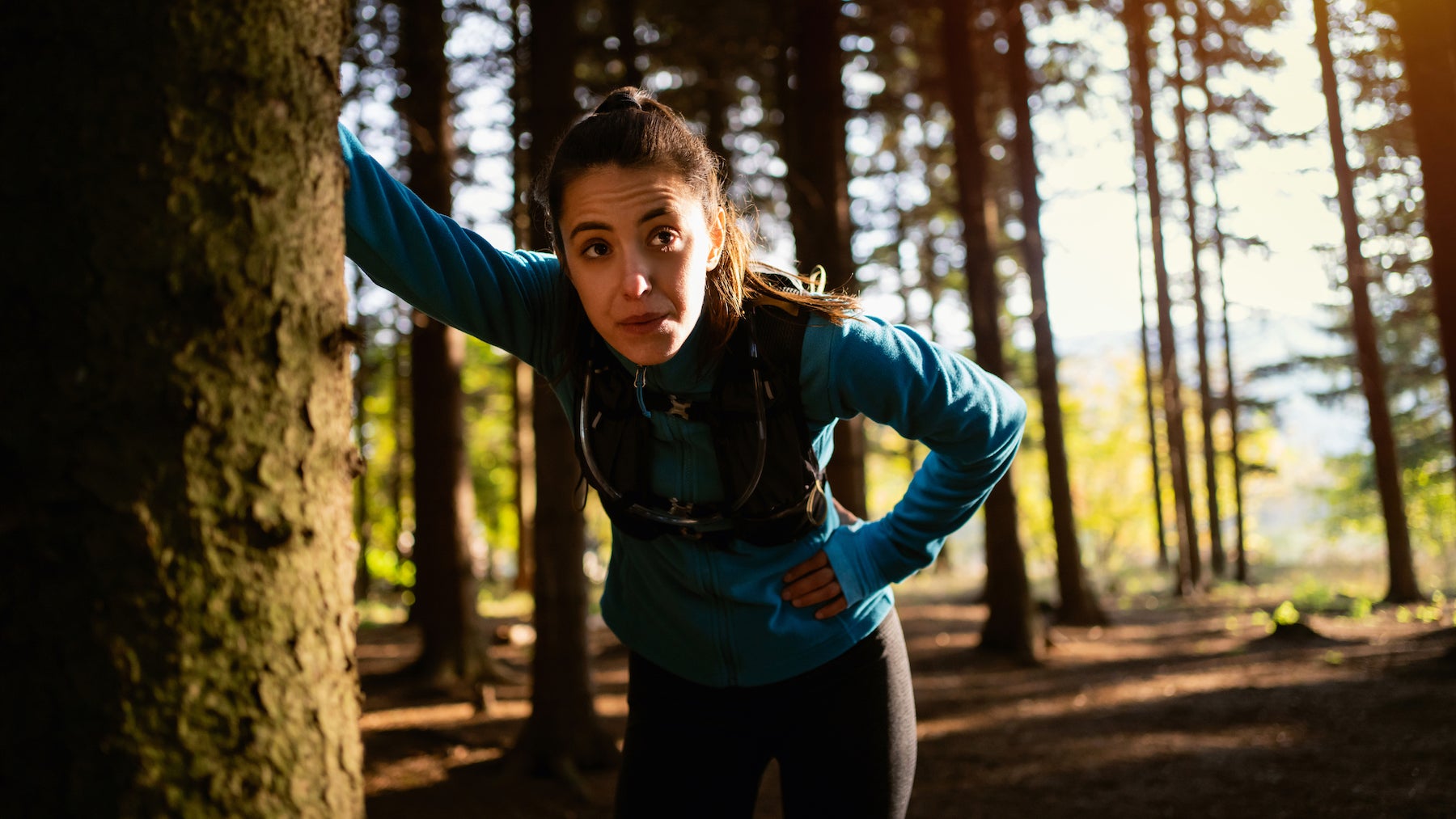
(Photo: SrdjanPav via Getty Images)
As backpackers, we spend hours and hours training our cardio, but only to find ourselves still breathless on the trail. That could be for a number of reasons—the trail is harder than what you trained for, your backpack is too heavy, or you’re not breathing correctly. Chances are, you aren’t breathing to optimize and maximize your gains. With practice, you can discover what efficient respiration can do for you. Let’s start by breaking down the muscles we use to breathe.
Respiratory Muscles
- The diaphragm is the main breathing muscle and fits like a partially open umbrella inside the bottom of the rib cage right under the lungs. This is the top of the “breathing canister.”
- The abdominals consist of the rectus abdominis (the six-pack muscles,) the inner and outer obliques, and the transversus abdominis. These make up the walls of the “breathing canister.”
- The pelvic floor makes up the bottom of the “breathing canister.”
When passively breathing, the diaphragm is responsible for most of the work, but it gets a little bit of help from the intercostal rib muscles. When breathing during exertion, the entire “breathing canister” should expand evenly in every direction, and contract evenly. There should be no “bubbles,” which often pop up with inefficient breathing.
For backpackers huffing and puffing up the steeps, secondary muscles often take over and claim center stage. These are muscles that should only assist breathing, such as the pectoralis minors, scalenes and SCM neck muscles, upper traps, intercostals, and lumbar back muscles. Over-activation of these muscles can lead to pain and dysfunctional breathing, which negatively impacts lung capacity as well as the exchange of oxygen and carbon dioxide.
Why does this happen?
These secondary muscles are typically in a shortened position while backpacking due to the nature of carrying a weighty load while breathing heavily, often for a long period of time. For example, the chest strap can restrict movement in your ribcage and breastbone, forcing your inhales into other areas of the torso, such as the upper back. In addition, the hipbelt on a backpack prevents proper contraction of the diaphragm and breathing expansion into the lower abs and back as well as relaxation of the pelvic floor.
ADVERTISEMENT
Proper 360° Breathing During Exercise
On an inhale, the diaphragm contracts down, and the ribs should lift like bucket handles, which expand the base of the ribs front to back and side to side. The sternum lifts like an old-fashioned water pump handle at the same time, and the pelvic floor relaxes (the opposite is true for exhale). When inhaling, it is important for the belly to expand slightly along with the mid and lower back. Don’t hold the inhale at the top of your breath.
On the inhale, avoid allowing your shoulders to shrug, and don’t tilt your ribcage up. This creates a “hinge point” in your back between the upper and lower spine. It’s a big no-no to let your head move forward or suck your belly in during inhales.
ADVERTISEMENT
It is also important to exhale slowly and for longer than your inhale and avoid cinching your waist as you exhale. In fact, you want the bottom of your lower ribs to come down flat and even on your exhale along with your lower abs. Last, pace your breathing; the longer you inhale and exhale, the better you exchange oxygen and carbon dioxide.
How to walk uphill without getting breathless
Wearing a properly fitted pack with the weight balanced on the hips and the load properly adjusted to keep the spine in alignment is critical. Equally important is learning to use 360° breathing when wearing a full pack, so you minimize effort while safely stabilizing your spine. Exhale with intention during high-exertion movements, such as big step-ups, and be sure to use all of your abs during your exhale, not just the lower section under the hipbelt. At the bottom of the exhale, hold briefly, then “let go” of the air and allow the next inhale to start naturally on the rebound.
Last, avoid mouth breathing. Yes, it sounds scary to try, but mouth breathing activates the sympathetic nervous system and turns on your “fight-or-flight” reflex. It might be unavoidable to use a little mouth breathing during really difficult sections, but with practice, learning to breathe through your nose will stimulate your parasympathetic nervous system, which will calm your breathing and keep your heart rate low.
Breathing Exercises For Hiking Success
Try these exercises for breathing better at home 2 to 3 times a week to increase your uphill hiking efficiency. These can be done any time you have a couple of minutes or during a workout.
ADVERTISEMENT
Hookline 360° Breathing
3 sets of 5 to 10 breaths. Inhale about 5 seconds, exhale about 10 seconds including the hold.
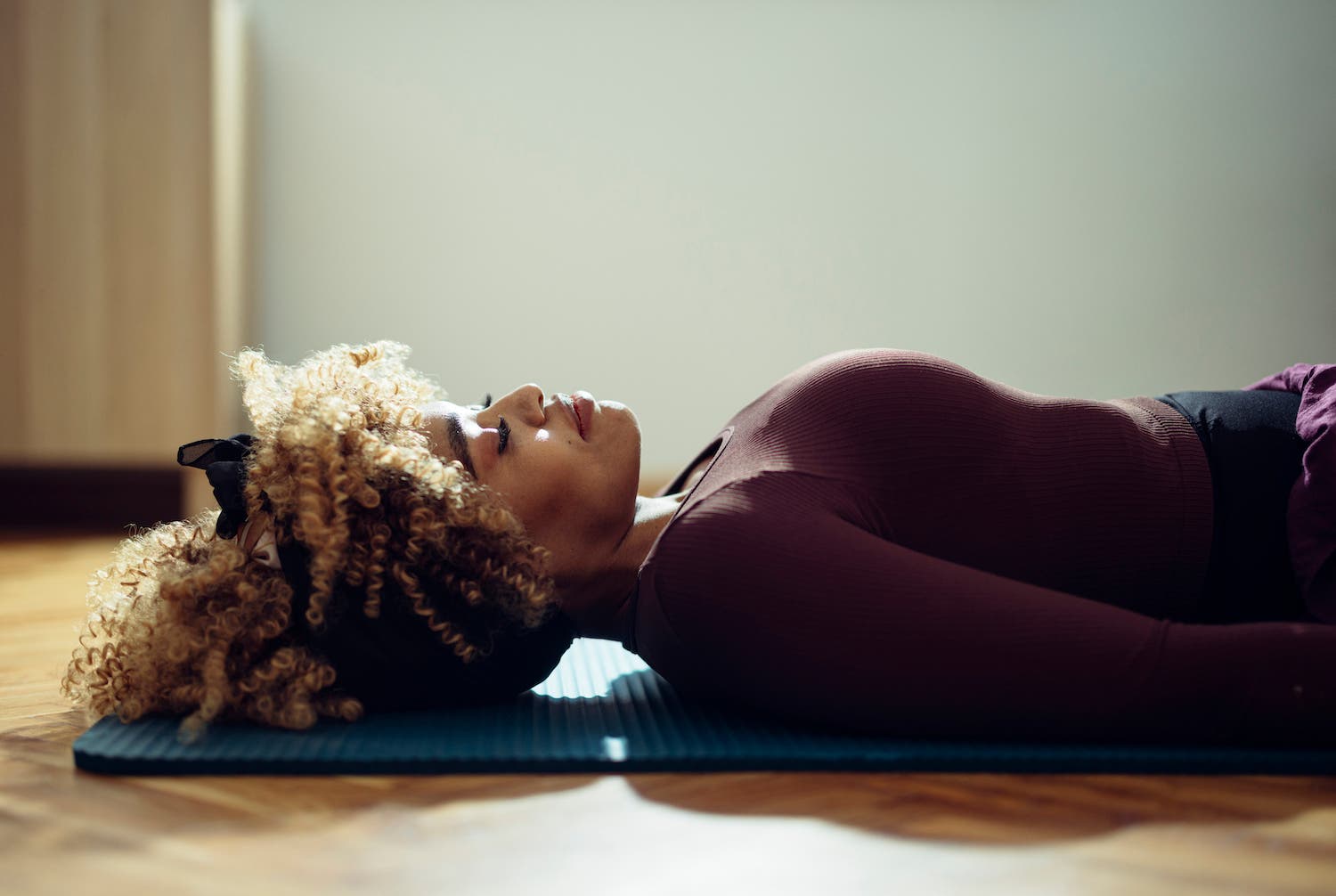
- Lie on your back with your knees bent and feet flat.
- Inhale, slowly, allowing your pelvic floor to relax and lower abs to fill slightly. Then continue your inhale into your mid-back ribs followed last by the front of your chest.
- Exhale completely by gathering up the lower abs (think zipping up a pair of skinny jeans) followed by your rib cage coming together and down flat—squeeze every drop of air out and hold at maximum exhale for 3 to 5 seconds.
- Relax and allow the next inhale to start naturally on the rebound.
Avoid tilting your ribcage up to breathe deeper, which can uneven ballooning of the lower or upper abdomen and shrugging shoulders.
Pallof Press
Anchor a medium-weight resistance band at chest height perpendicular to your body and perform 3 sets of 8 reps. Wear a lightweight backpack and increase its load by 10 to 15 percent each week.
- Stand on two parallel feet, knees slightly bent. Hold the band with both hands in front of your breastbone. Roll your shoulders back and down.
- Exhale as you reach your hands forward from the shoulder blades without rotating your torso.
- Inhale as you return your hands to start by pulling your shoulder blades together.
Be sure to maintain a neutral spine and pelvis (keep your shoulders un-shrugged), and move from the shoulder blades, not the arms. Also, breathe with even pressure on the inhale and exhale, just like you did in the Hookline Breathing exercise.
ADVERTISEMENT
Abducted and Adducted Lunges
Use a medium-weight resistance band and perform 3 sets of 8 reps each. Wear a lightweight backpack and increase the load by 10 to 15 percent each week.
- Anchor the band to knee-height perpendicular to your front knee.
- Step either foot into the band and place the other foot behind you.
- Inhale as you drop down over two counts into a 90/90 lunge with your rib cage over your pelvis.
- Exhale as you come up over two counts. Don’t bring the feet together; complete all reps on one side before switching feet.
- Keep the mound of your big toe pulled back and your pinky toe pressed firmly down.
- Do the exercise twice. Once with the band anchored on the left and again on the right for each foot.
As you perform these lunges, keep your ribcage stacked over the pelvis with your front knee over the front ankle, and don’t lean forward. Inhale into the lower abdominals and mid-back, and exhale with even pressure.
ADVERTISEMENT
Robyn is a corrective exercise specialist with over 10 years of experience and an invisible disabilities advocate.
Robyn Fog
MS Physiology, PCES/CES/CPT/WFS/FNS
Owner of Hypermobility Exercise Solutions
HypermobilityExerciseSolutions.com
Evergreen, CO
