Published November 17, 2022 01:13PM
Hikers Rejoice: Yosemite is Nixing Reservations Next Year
The park is giving up on its 3-year-old timed entry program, but says it's still committed to finding ways to keep visitor numbers manageable.
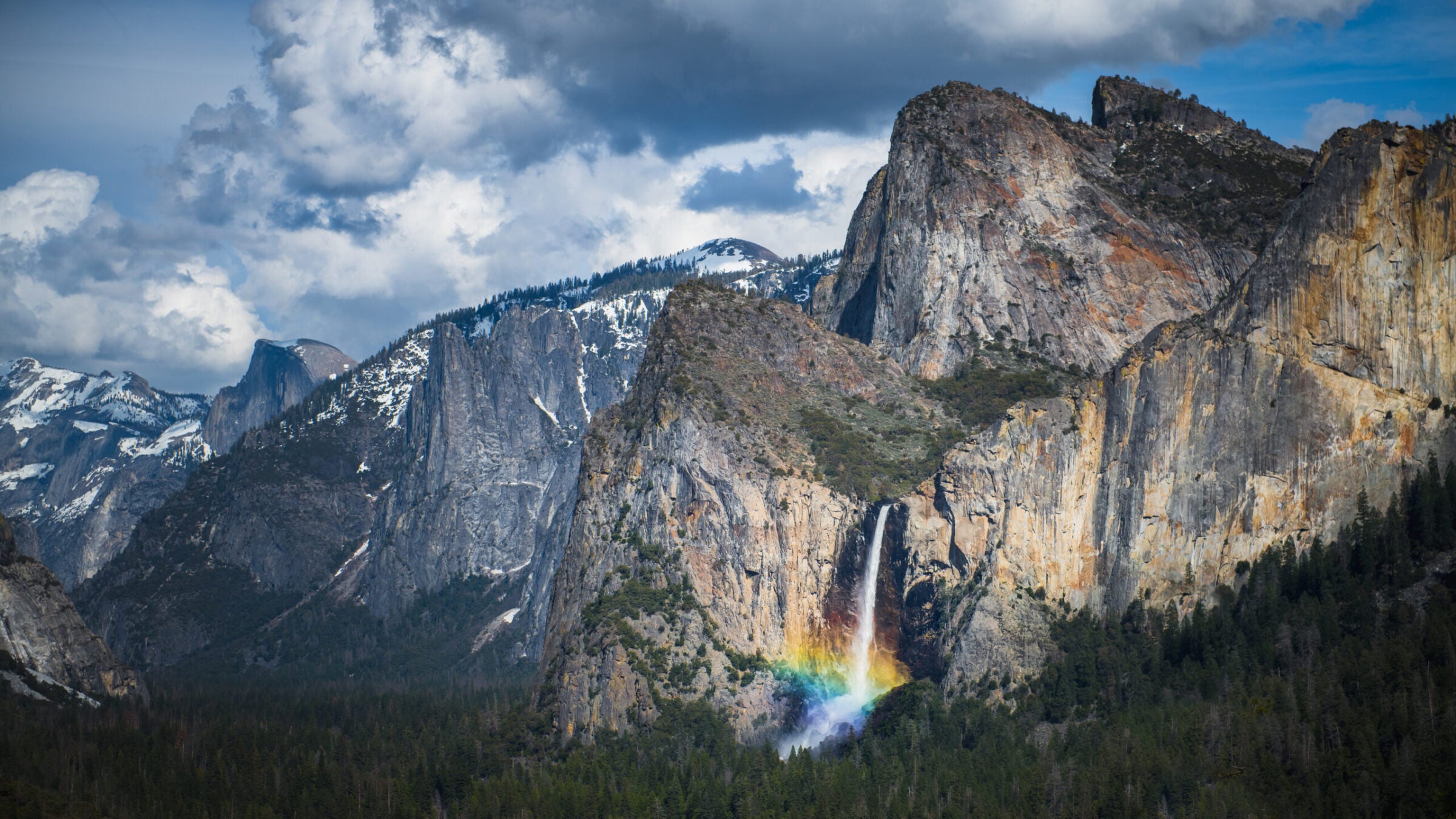
A rainbow emerges from the mist at the base of Bridal Veil Falls in California's Yosemite National Park. (Photo: Image by David Gregg/Moment via Getty Images)
Visitors heading to Yosemite National Park in summer 2023 won’t need a reservation as the park ends its 3-year-old timed entry program, the National Park Service announced this week.
Park officials initially implemented a reservation system in 2020 as Covid closures drove record numbers of visitors to the park, and later renewed the program through 2021 and 2022. Other parks followed suit, with destinations from Arches to Rocky Mountain requiring would-be hikers and tourists to book their visit days or weeks in advance. With pandemic closures receding and crowds expected to follow suit, the NPS says it’s high time to open up to walk-ins once again.
“Yosemite has been grappling with congestion—even gridlock—for decades,” park officials wrote on Yosemite’s Twitter account. “We want to build from the lessons learned from the last three summer of managed access.”
“We don’t want to see a return to the days of visitors being stuck in hours-long traffic lines before hiking overcrowded trails,” Rose said.
Although it’s one of the most high-profile national parks, Yosemite isn’t the most visited. In 2021, Yosemite hosted about 3.3 million visitors. Comparatively, Zion National Park welcomed 5 million visitors, and the Great Smoky National Park, which has a main thoroughfare running through it, hosted 14.1 million visitors. Nor was the park the first to try reservations as a tactic: In 2018, Muir Woods National Monument implemented a permanent reservation system to mitigate traffic.
With the future of the park’s reservation system in question, Yosemite officials are hoping to collaborate with local businesses and park visitors to determine the best way to manage traffic in the future. Besides clogging up major attractions, crowding can worsen issues like air pollution and the degradation of the park’s natural environment. One possibility might be to require reservations for the most-visited sites, a tactic that parks like Zion and Acadia have turned to in the face of record visitor numbers.
Although the park will no longer require a vehicle reservation, it still encourages visitors who are hoping to camp or lodge there to make prior arrangements for lodging; a daily or annual park pass is also still required for entry.
