Published February 1, 2023 06:49PM
If you buy through our links, we may earn an affiliate commission. This supports our mission to get more people active and outside.Learn about Outside Online's affiliate link policy
It’s Time to Start Packing Out Your Toilet Paper
With trail use booming, burying your toilet paper just doesn’t cut it anymore. It’s time to get over the ick and start carrying it out, says our writer—or ditch it altogether.
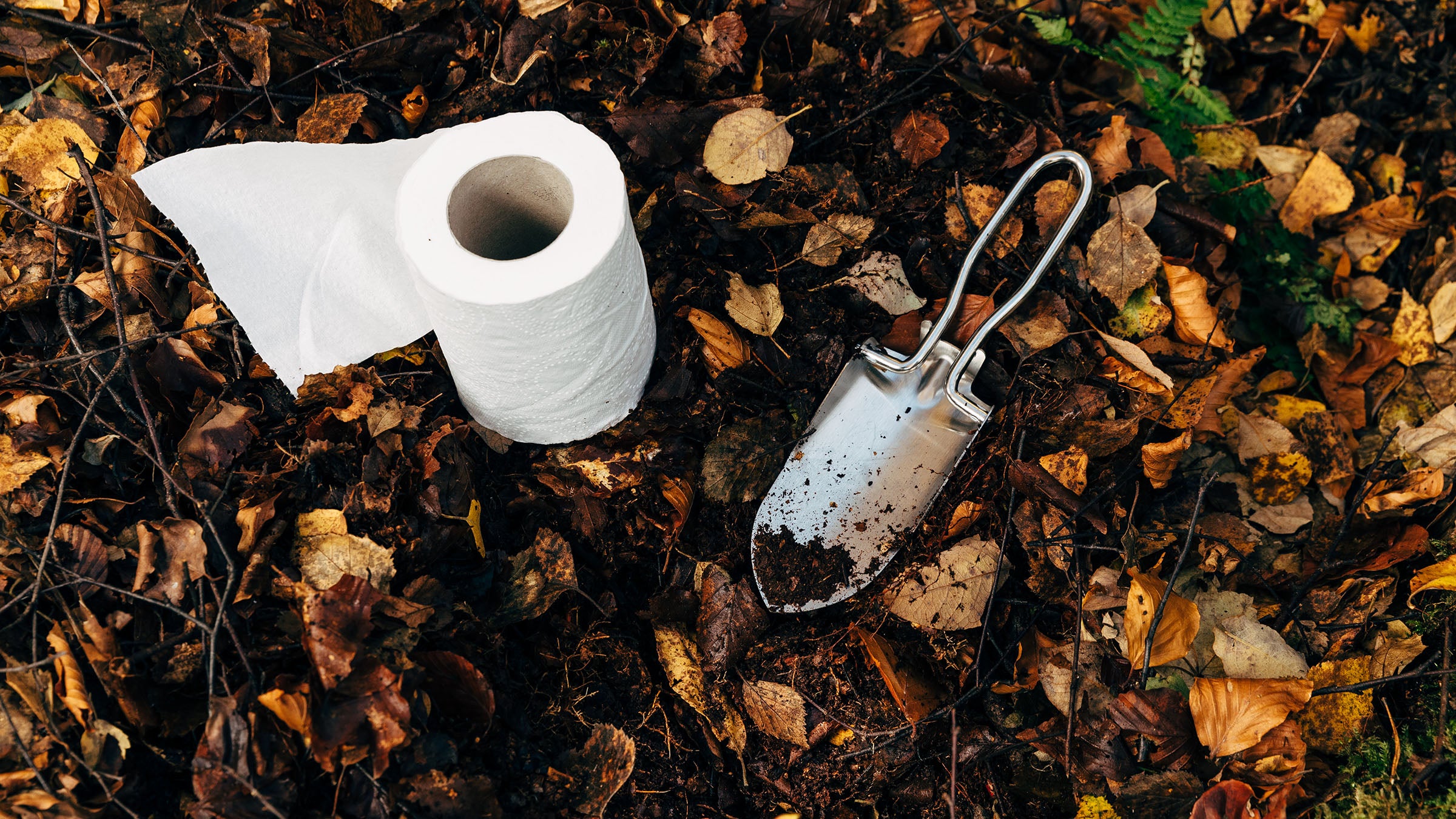
Trowel and toilet paper (Photo: lucentius / E+ via Getty)
In 2011, I applied for my Pacific Crest Trail permit two weeks before I left on my first thru-hike. It was a formality—less than 300 people completed the trail that year, so I never had to jockey for a preferred start date. There was solitude and a choice of any campsite in the desert. It was the total immersion into nature that I expected.
Then, the popularity of long-distance hiking exploded, and so did the signs of use on the trail. In 2016, I was back on the PCT, and a new sight dotted the trail: Toilet paper “flowers” were all around the established campsites. It was worse when I returned in 2018; some areas had transcended from noticeable to gross.
The situation has only gotten worse. On the John Muir Trail last year, waste sat on the surface, paper clung to bushes, and cringingly shallow, barely-covered catholes ringed nearly every established campsite. Not only was it alarming to look at, it meant I had to be even more careful when finding a spot to relieve myself.
That hike was a demanding one: I set a new fastest known time for the trail. But I still packed out my toilet paper. With trail use only continuing to increase, we all need to start packing it out, or else find another option when taking care of business in the woods.
There are hundreds of privies on the Appalachian Trail, and still, toilet paper flowers are rampant. The frequent outhouses can’t mask the signs of use from three million people on the popular east coast trail.
Whether the papers are dug up by animals or simply left on the surface by thru-hikers, the solution is clear: we need to pack out our toilet paper. Not only is it an eyesore, but the garbage also exposes the plants and animals to bleach and other toxic chemicals. In fragile and alpine environments, it takes years to decompose.
Some forest users have had the wild idea to burn their business papers rather than pack them out. The effects have been disastrous. In Arizona last year, a man started the Pipeline Wildfire after trying to light his toilet paper on fire; the blaze would go on to burn more than 20,000 acres. Burning toilet paper sparked a 5,000-acre wildfire in the Canary Islands in 2017, and another 4,000-acre fire in Portugal in 2016. Obviously, lighting it up isn’t a good option.
Principle 3 of Leave No Trace is to dispose of waste properly, and this extends to toilet paper. With as simple a method as burying the waste and packing out the used paper in a plastic bag, your impact can be lessened. Double bagging it, adding powdered bleach, and using an opaque bag or an empty freeze-dried meal bag can make the act feel less gross, but if it feels gross to carry it, it should feel even worse to discard it in the woods where it becomes someone else’s problem.
There are a number of tools to avoid using toilet paper altogether. Many hikers have made the switch to a small bidet system that screws onto the top of a water bottle. The Kula Cloth has become incredibly popular for women on the trail. The antimicrobial, eco-friendly piece of gear eliminates a lot of need for toilet paper.
Nature is resilient, but not infinitely so. The way we go number two can result in litter, fires, and heavily impacted ecosystems. People explore the woods for an escape, an adventure, and an immersion in nature—not to see other people’s gross leavings. It is time that we all make the pledge to take “pack it out” to the next level and bring a new level of respect to the outdoor spaces.
ADVERTISEMENT
How to Go Responsibly
When nature calls, there are a few principles to follow.
- Take care of business at least 200 feet from the trail. There is nothing worse than a trail crew or another unsuspecting hiker uncovering your work, and distancing yourself from the hiking corridor can minimize this scenario.
- Dig at least a 6-8 inch hole. In most environments, the tip of a trekking pole will not suffice to create an acceptable hole. Trowels are very lightweight and reasonably inexpensive, making the process much less cumbersome. (Note that catholes aren’t a good solution everywhere: In fragile ecosystems like the desert or the high alpine, using a wag bag is a better way.)
- Cover the hole sufficiently. Most catholes are dug near campsites, and these are often in the lower areas of a trail. This means that heavy rains can wash and unearth a lightly covered hole. There are also more animals at lower elevations, which increases the likelihood of some curious varmint uncovering the hole.
- Pack out all papers, feminine projects, and wet wipes. For years the standard was to bury toilet paper securely, but in some areas, it can take up to three years to decompose. Some feminine products and wet wipes will never decompose. I pack out mine in a zip-top bag inside of a nontransparent outer bag such as a shopping bag. Another option to disguise the bag is to wrap it in duct tape.