Updated December 4, 2025 09:57AM
If you buy through our links, we may earn an affiliate commission. This supports our mission to get more people active and outside.Learn about Outside Online's affiliate link policy
The Best Hiking Boots for Winter (2026)
These kicks have the insulation, waterproofing, and support to keep you on-trail through the cold season.
While there are dozens of great three-season hiking boots on the market, winter footwear is much trickier to pull off successfully. Designers need to strike a delicate balance between the comfort, support, and agility you’d find on a fair-season hiker, and the warmth and traction you expect from your favorite pair of Sorels. Luckily, the bar gets raised every year: this season’s crop of the best winter hiking boots will go the distance, whether you’re slogging through cold muck or climbing up icy, snow-covered mountains.
Best Winter Hiking Boots: At a Glance
- Best Winter Hiking Boots Overall: Salewa Puez Winter Mid Powertex ($280)
- Best for Hunters: Meindl Air Revolution Alpine Pro 200 ($449)
- Best City-to-Trail: Salomon X Ultra Snowpilot Waterproof ($160)
- Best for Shoulder Seasons: Mammut Blackfin III Mid DT ($209)
- Best for Moving Fast: Merrell MTL Thermo Rogue 4 Mid Gore-Tex ($189
$270) - Best Everyday Hiker: Columbia Expeditionist Extreme Winter ($170)
- Best Winter Day Hiker: Scarpa Moraine Polar GTX ($219)
- Best for Big Days: Hoka Kaha 2 Frost GTX ($280)
- Best for Bushwhacking: Lacrosse Ursa LS GT ($400)
Best Winter Hiking Boots Overall
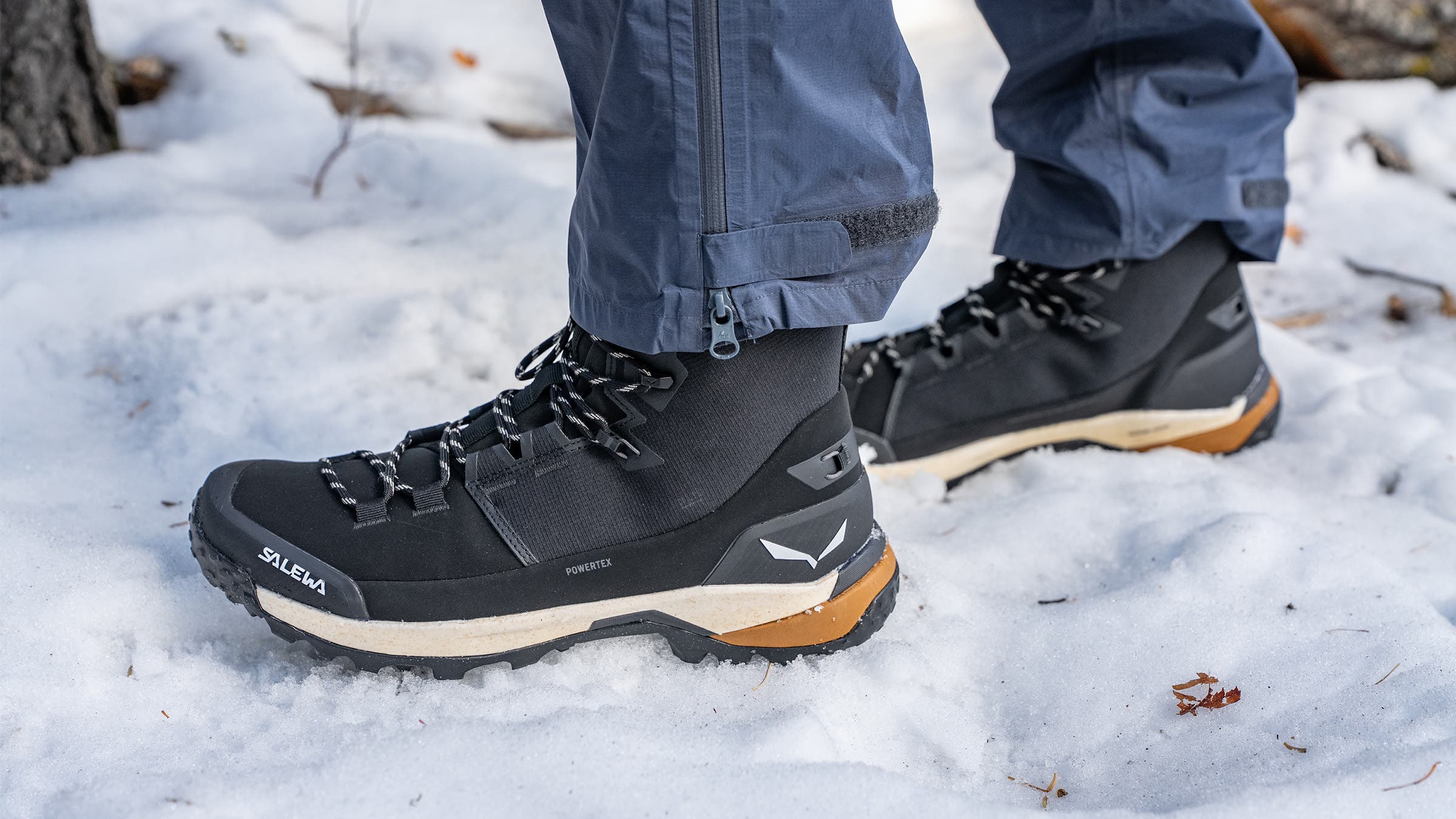
Salewa Puez Winter Mid Powertex
Sizes: Men’s 7-13, Women’s 6-11
Pros and Cons
+ No break-in required
+ Good in deep snow
+ Great grip
+ Light and fast
– Cold below 10 degrees
Many winter boots will do the job of keeping you warm, dry, and supported—but you’ll want those straightjackets off as soon as possible. That was definitely not the case with the Puez Winters. I wore these boots on a multi-mile, deep-snow hike and a couple of muddy slogs, and then kept them on during the road trip home. I even wore them to work for a week straight and never once felt the need to fling them off.
All that comfort comes from smart shoe design—a well-engineered heel cup that kept my blister-prone foot snugly in place without feeling like a vice grip, a lightweight build (each boot comes in at one pound for a men’s size 10), a cushy hemp midsole, and a just-right rigidity that made them great for scrambling, but not ski-boot stiff.
ADVERTISEMENT
These were not the warmest boots we tested, but they were up to the challenge down to 6 degrees Fahrenheit, as long as we were moving. That heat retention comes from a felt lining around the collar, 200 grams of Primaloft Gold insulation in the toe box, a 2.5mm wool and cotton lining around the upper, and a felt-lined footbed. Anchorage, Alaska-based tester Charlie Ebbers wore them non-stop for several days after a late fall snowstorm and said his toes were warm and happy while walking the dog, working on his cabin, grocery shopping, and even during some night hiking.
The boots shed slush and snowmelt thanks to a PFAS-free waterproof Powertex membrane, even keeping my feet dry while standing in an icy river for 40 minutes straight. All our testers found the grippy outsole ideal for staying upright on packed snow or steep, rocky trails thanks to aggressive toe and heel lugs.
Hunters who plan to sit around in the snow for hours on end scoping out animals should look elsewhere (try the more heavily insulated Mendl boot below), but for everyone else who wants to get out and explore the world from November through March, the Puez is a well-balanced choice.
ADVERTISEMENT
Best for Hunters
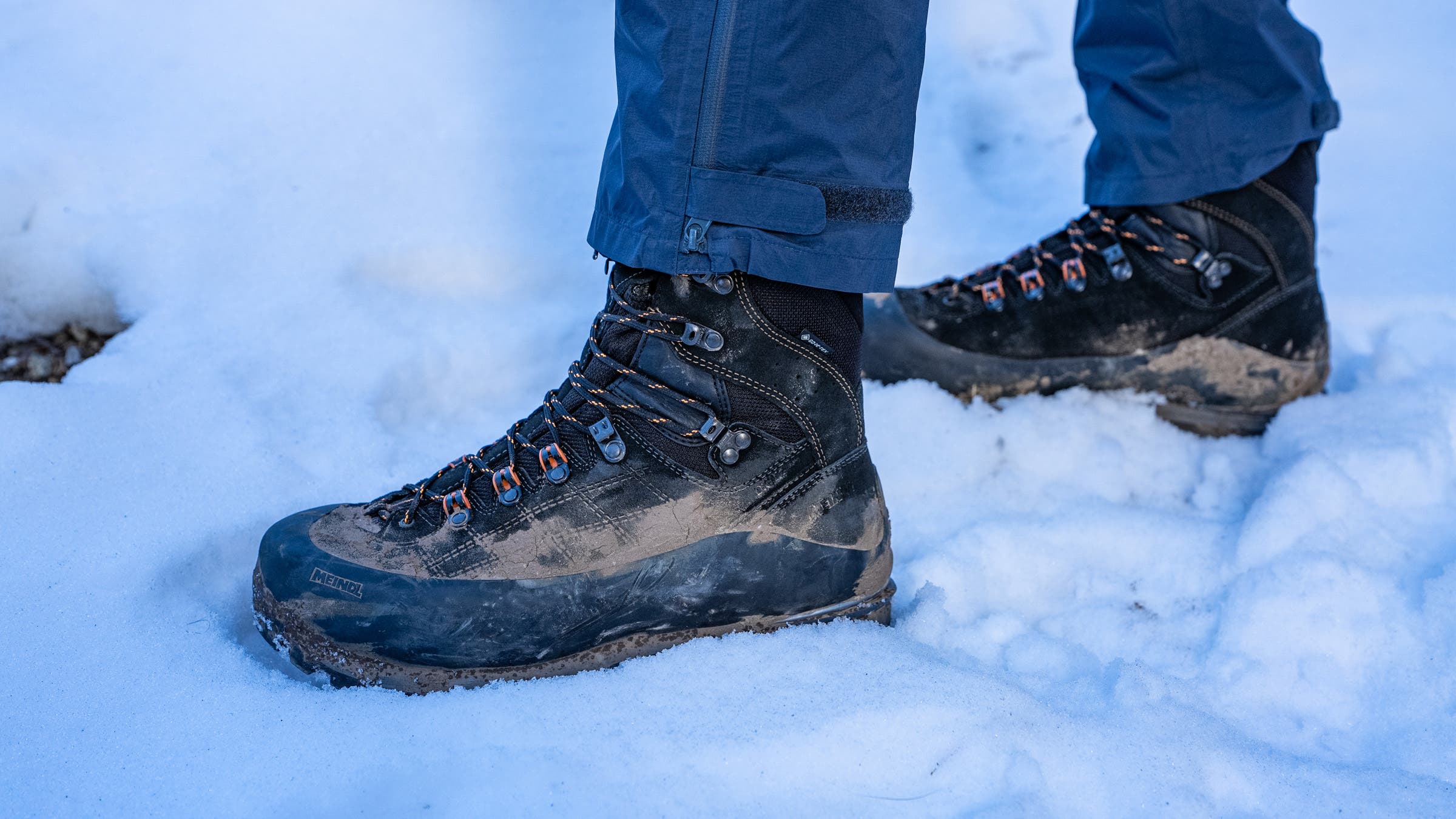
Meindl Air Revolution Alpine Pro 200
Sizes: Men’s 8-14
Pros and Cons
+ Nearly indestructible
+ Very warm
+ Supportive
+ Short break in time
– Heavy
– No women’s sizes
It makes sense that these boots were designed in Germany: they’d be at home on a technical winter climb in the Alps thanks to a crampon-compatible sole, heavy-duty waterproof build, and 200 grams of Gore Duratherm synthetic insulation. But all that tech works equally well for winter hunters and off-trail explorers, which we discovered through our season of testing.
To vet the Alpine Pros for the rigors of sitting on a high-alpine ridge glassing for elk or deer, I stood still in 10-degree temperatures for 90 minutes and waded into a snowbank for 40 before the cold started to creep in. The boot’s robust insulation pairs with a Gore-Tex liner to block moisture while staying relatively breathable.
Meindl claims that a smart tongue design allows the boot to suck in fresh air when your heel hits the ground and forces warm air out when you push off. We found that claim hard to prove—but on a bushwack through the forests near El Rito, New Mexico, our feet never got clammy, even on a mild 45-degree day.
ADVERTISEMENT
These burly boots are designed to let you cover a lot of ground comfortably. Testers appreciated the thick-but-pliable suede uppers, which kept us walking naturally on an eight-mile bushwack up to 12,000 feet outside of Peñasco, New Mexico. Deep, grippy Vibram outsoles provided plenty of bite, but still offered some feedback. Given their heft (each boot weighs 1.83 lbs), we proactively wore the Alpine Pros on a couple of break-in hikes. But we needn’t have worried: the boots conformed to our feet almost immediately.
Best City-to-Trail
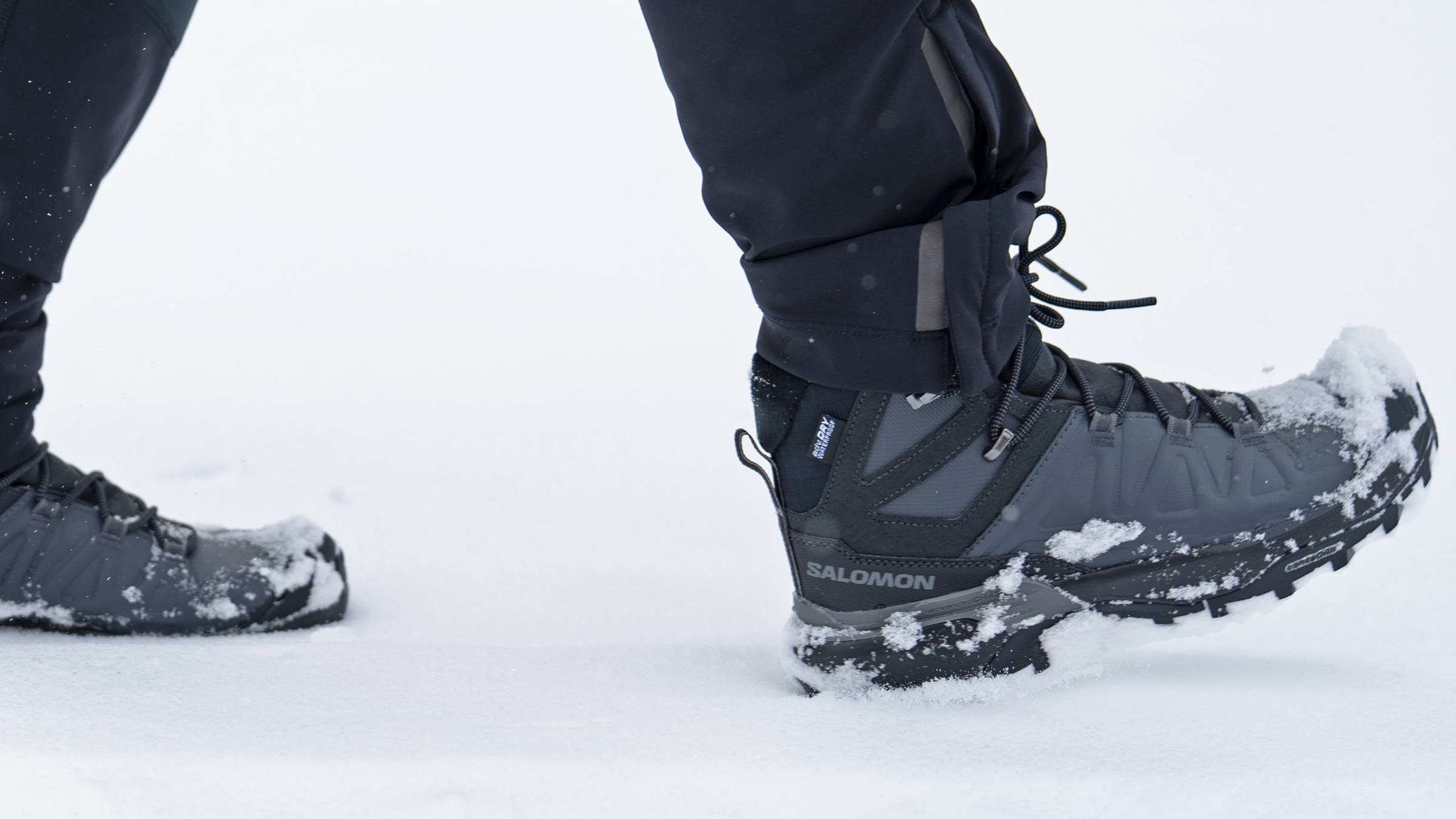
Salomon X Ultra Snowpilot Waterproof
Sizes: Men’s 7-14
Pros and Cons
+ Relatively breathable
+ No break-in period
+ Good-looking
– Low Cuff
In recent years, Salomon has earned a reputation in the fashion industry, with celebs like Bradley Cooper and Snoop Dogg sporting flashy hikers from the brand. The Snowpilots have plenty of swagger, with chunky lugs, a sleek build, and a two-tone color scheme. They’re also stellar boots for cold-weather hiking, making them some of the best city-to-trail crossover duds for winter.
The Snowpilots got top marks during a winter Editor’s Choice testing trip in Maine’s 100 Mile Wilderness. These boots kept our editors’ feet toasty, even during a winter snowstorm that brought biting, blowing winds and temps in the low teens. That’s thanks to Salomon’s 70-percent-recycled polyester insulation and a soft fleece cuff. While snowshoeing up the North Summit of Shaw Mountain in two-foot-deep powder, the boot’s waterproof membrane and PU-coated leather upper blocked moisture out completely, while a breathable liner wicked sweat away during steep climbs.
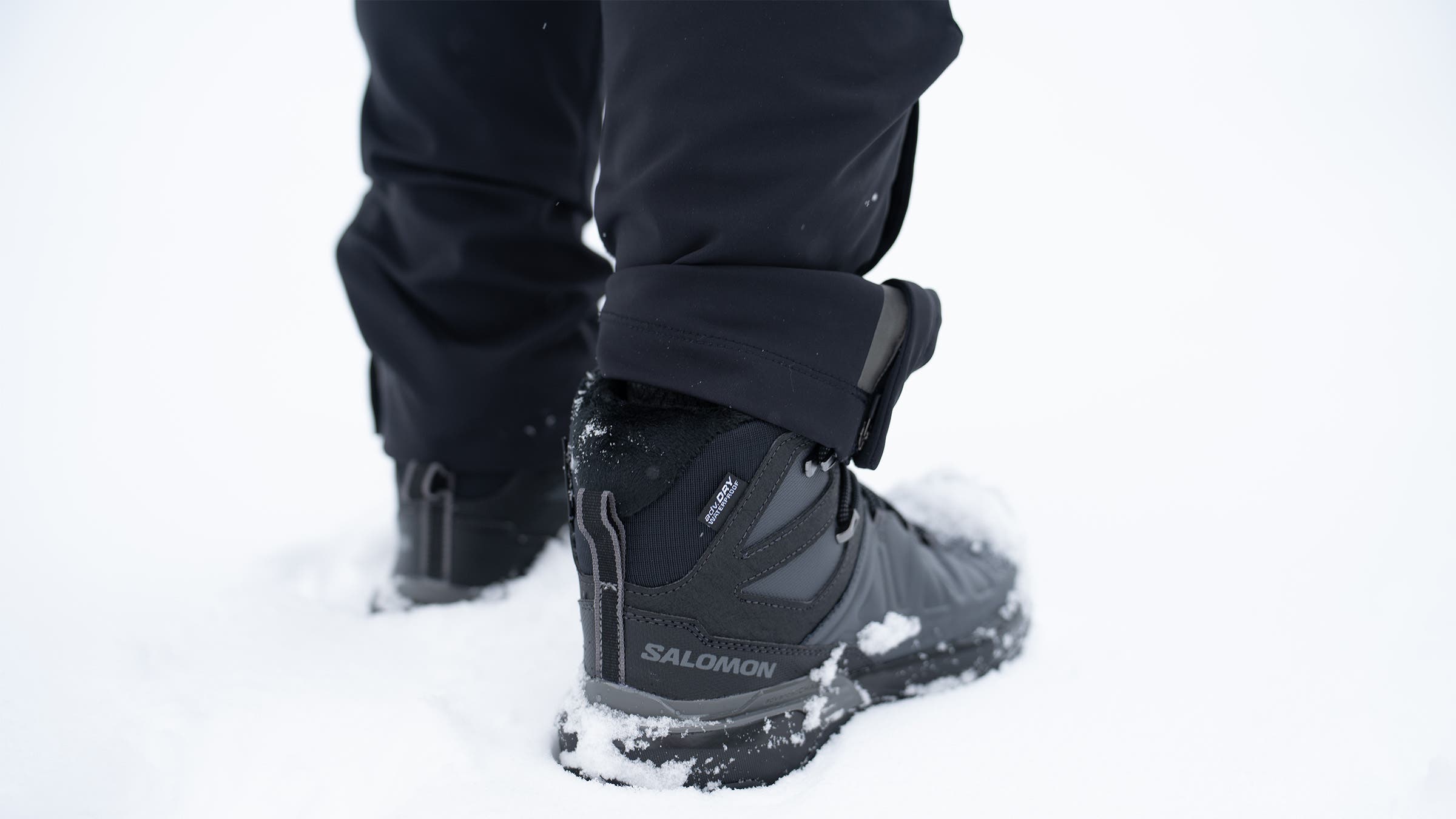
The downside to these boots? A four-inch cuff height that failed to keep deeper snow from sneaking in, making them better-suited to packed trails. After the snowshoeing expedition, testers walked dogs in snowy neighborhoods around Yarmouth, Maine and went on shorter jaunts to test traction on icy trails and in slick parking lots. Deep, widely-spaced treads dug into fresh snow well, they reported, but the traction wasn’t exceptional on ice.
ADVERTISEMENT
The Snowpilots’ fit is generous for Salomon’s typically narrow sizing, with a wider toe box, which was welcome for testers wearing thicker winter socks. Thankfully, the midfoot and heel cup were still plenty snug for testers, minimizing slippage.
Best for Shoulder Seasons
Mammut Blackfin III Mid DT
Sizes: Men’s 7.5-14, Women’s 5-10
Pros and Cons
+ Grippy
+ Relatively lightweight
+ Moves like a warm-weather hiker
– Finicky lacing system
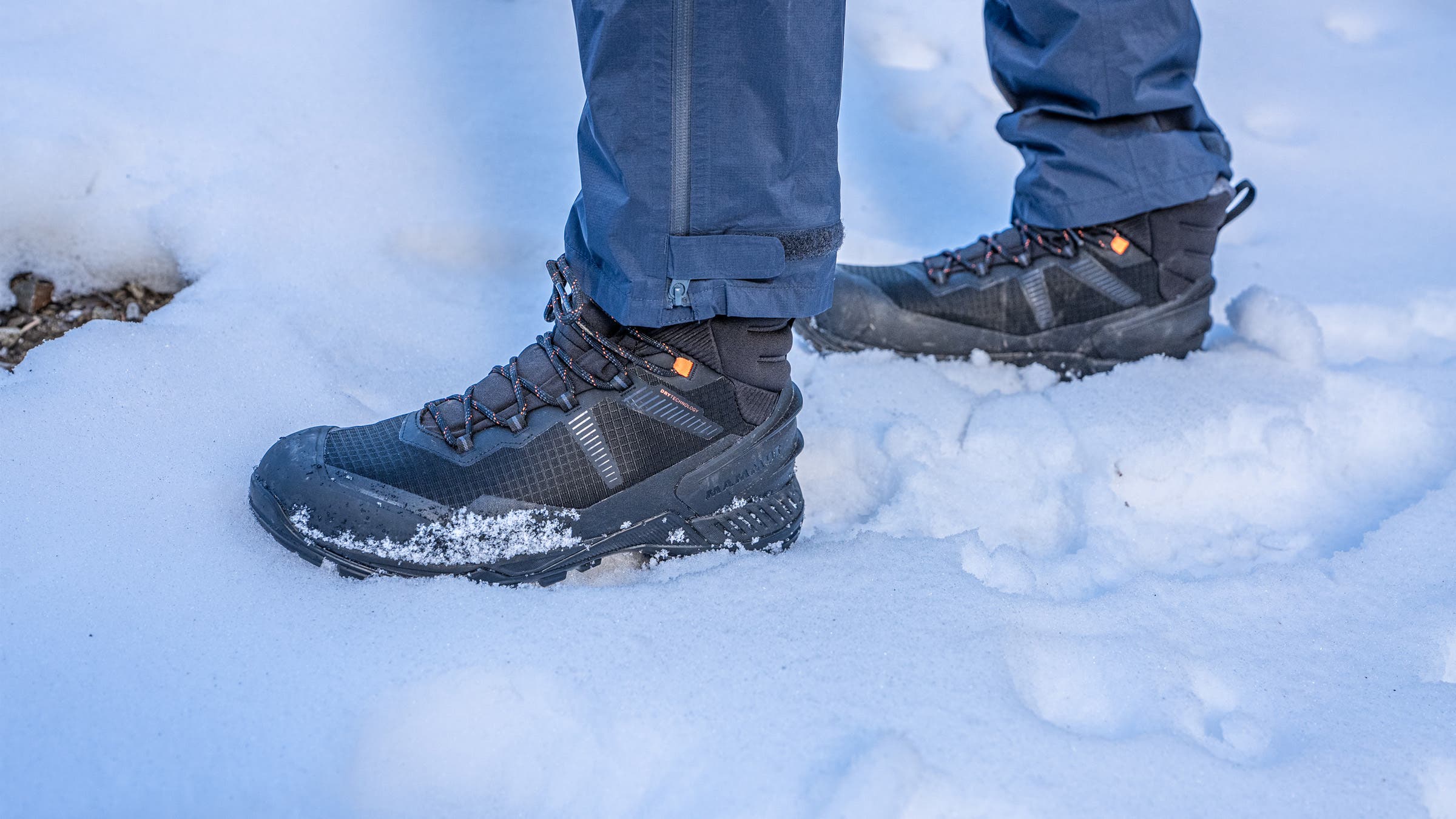
Of all the winter boots we tested, the Blackfin III feels the most like a traditional three-season hiker. That’s thanks to the relatively lightweight build (1.3 pounds per boot for a men’s 9.5) and the mid-high cut, which kept snow out but didn’t make us feel like we were wearing a special winter boot. It’s built for those who put in lots of miles regardless of weather and won’t stop trekking just because it’s below freezing or there’s snow on the ground.
The boot’s warmth, which was immediately noticeable—but not overpowering on days when the sun was out—comes from insulation woven through with aluminum thread that helps reflect body heat. A waterproof membrane stood up to our icy river cold-plunge test without issue.
The Blackfin III’s Vibram outsole with chunky, all-terrain tire-like treads stuck to a variety of terrains, from loose dirt to packed snow. Combined with the lightweight build, this boot proved to be a versatile piece of footwear that allowed us to cover a lot of miles between the icy fall and the muddy spring.
ADVERTISEMENT
The only hiccup our testers had with the Blackfin III was with the lacing system. Although no one had any heel movement or blister buildup, Seattle, Washington-based tester Kip Malone found it hard to get them cinched as tight as he wanted for more technical hikes, and had to stop and re-lace a few times before everything settled in.
Best for Moving Fast
Merrell MTL Thermo Rogue 4 Mid Gore-Tex
Sizes: Men’s 7-15, Women’s 5-11
Pros and Cons
+ Supportive
+ Aggressive sole
+ Great for snowshoeing
– Pricey
– Bold aesthetic not for everyone
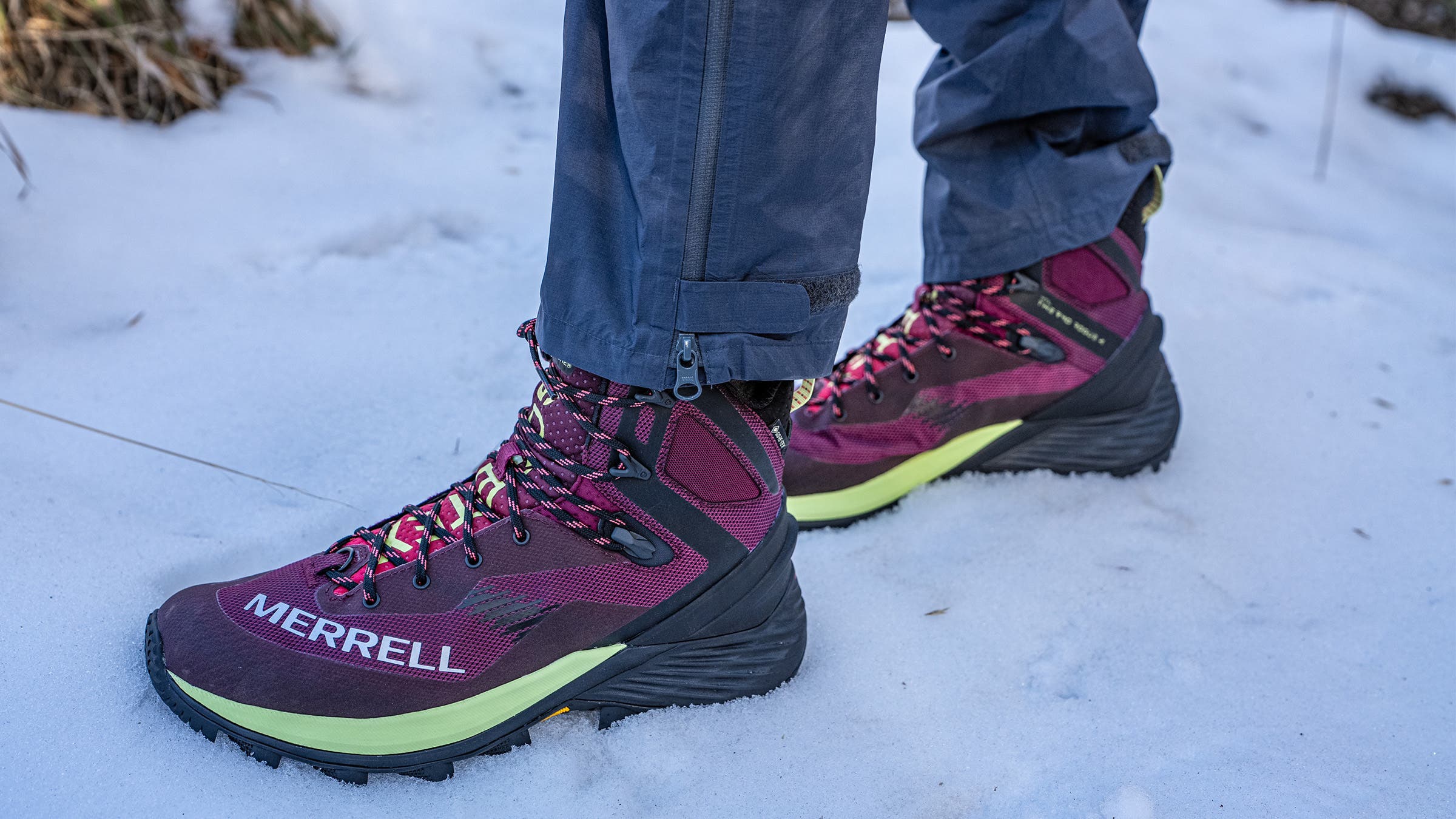
Most folks out for a winter hike aren’t attempting an FKT (Fastest Known Time). But if you’re feeling competitive—or just want a winter boot that won’t slow you down—the Thermo Rogue 4’s is one of the most agile cold-weather duds on the market.
That sure-footedness at speed comes from a few special features, including a bouncy, dual-density foam midsole that provided lots of energy return when pushing off. Vibram Arctic Grip outsoles with terraced, tooth-lined five-millimeter lugs kept me upright while running up and down snowy trails throughout the Sangre de Cristo Mountains north of Santa Fe, New Mexico. An extra tall rigid ballistic mesh upper (with a Gore-Tex Liner) provided plenty of ankle support, but also snugged to my feet like a sock, creating a comfy, blister-free fit right out of the box and keeping the individual boot weight down to 1.3 lbs.
ADVERTISEMENT
This boot is properly warm: 200 grams of Primaloft Gold Eco Series synthetic insulation and aerogel for the insole and over the toe made them comfortable while standing around in 15-degree temps. My feet did overheat occasionally when I was really huffing up a hill, but not so much that my socks were a puddle of sweat. Bonus: a ridged strap-holder on the heel makes them just as good for snowshoeing as they are speed-hiking.
Editor’s note January 2026: These boots are being phased out by Merrell, but limited stock remains at a major discount.
Best Everyday Hiker
Columbia Expeditionist Extreme Winter Boot
Sizes: Men’s 7-15
Pros and Cons
+ Grippy on ice
+ Comfy out of the box
+ Versatile medium-high collar
– Not meant for extreme cold
– Ugly
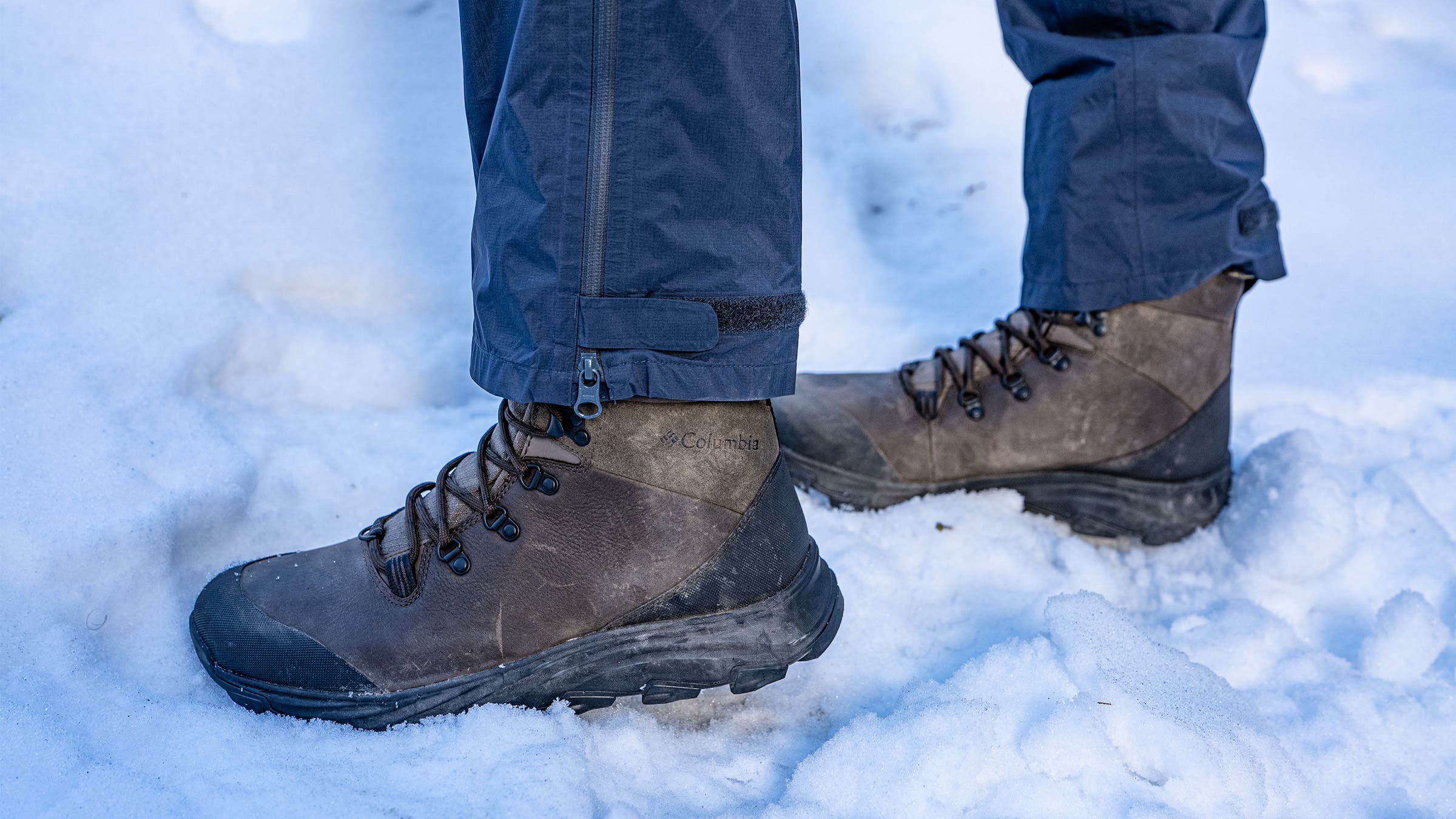
The Expeditionist Extreme Winter Boot, despite its formidable name, is the ideal everyday boot: Not exceptional at any one thing, but pretty good at everything and very comfortable. They’re a one-size-fits-all solution if you like spending time outside when it’s cold, but don’t want to go too far or stay out too long.
This boot is ideal for casual snowshoers. The high cuff keeps out snow, while a flexible-but-sturdy midsole feels offers just the right amount of bend and lateral support for a binding. The boot has a nice, bouncy step with good energy return, and felt ideal on hikes in the three- to five-mile range—although it felt underpowered on bigger days. Columbia’s proprietary outsole material, Omni-Grip Ice, and wide-spaced lugs did a better job than most of keeping our testers planted during a mid-winter trip in northern Maine.
ADVERTISEMENT
Moderate cold wasn’t an issue for our testers thanks to the boot’s 400 grams of synthetic insulation. When temps got really low, however, thick woolen socks were a necessity: Ice fisherman and road workers who have to stand around in the cold all day should look elsewhere. But for mixed, slushy conditions, testers appreciated Columbia’s proprietary waterproof/breathable membrane, which never leaked a drop and allowed for some ventilation in a wide range of temps (teens to mid-40s).
Our testers’ biggest complaint? These boots aren’t exactly easy on the eyes with a somewhat top-heavy, bloated upper and muted colorways. But if you’re looking for a purely utilitarian winter boot for moderate conditions, these boots will provide versatile comfort day in and day out.
Best Winter Day Hiker
Scarpa Moraine Polar GTX
Sizes: Men’s 7-14, Women’s 5-10
Pros and Cons
+ Mid cut is perfect for everyday use
+ Easy to wear
– Not insulated enough for frigid weather
– No color choices
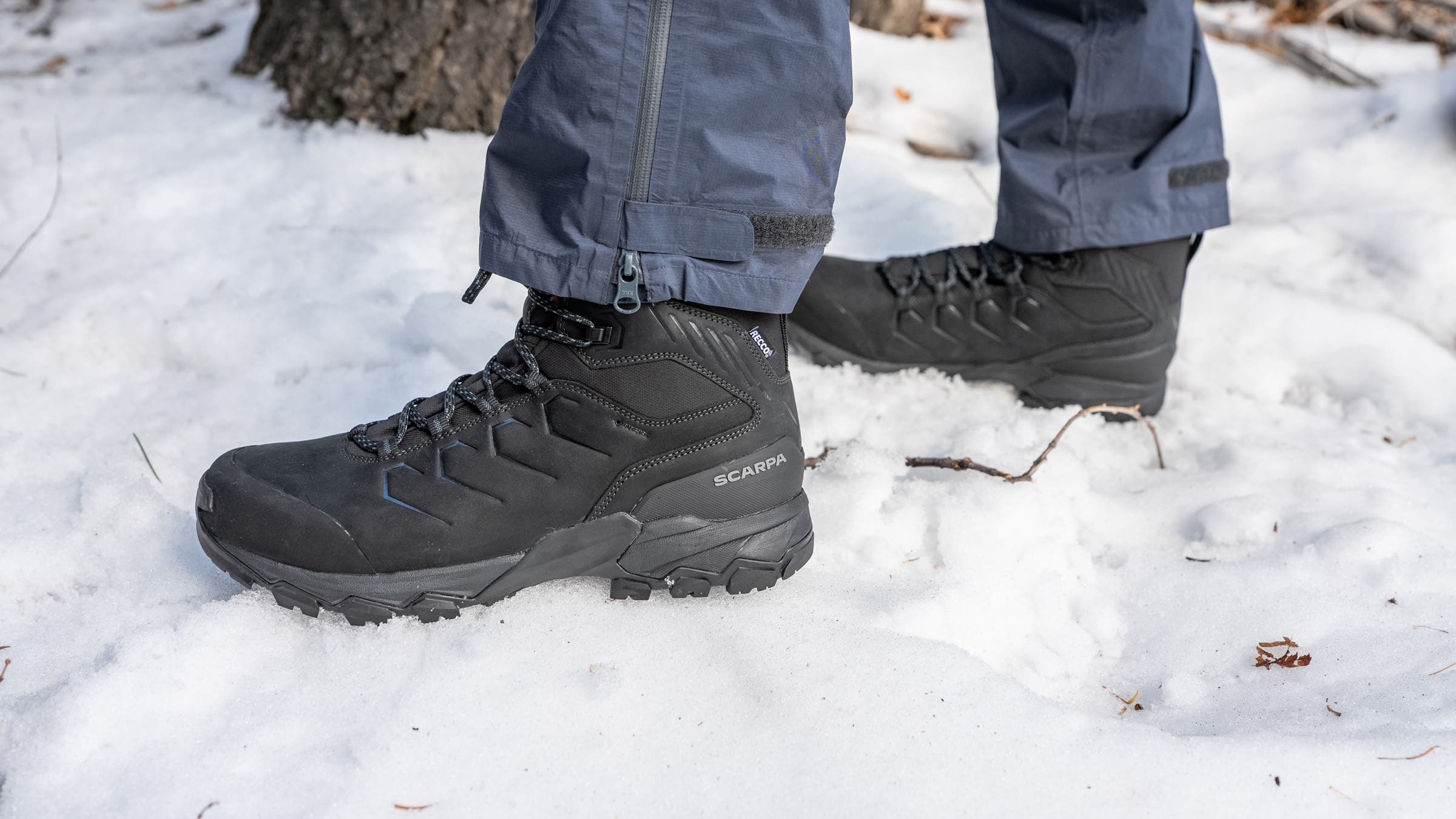
Overbuilt design is a real issue for winter hiking boots. Do you really need a boot with crampon compatibility? Do you need enough support to haul a dead elk on your back off-trail? The Moraine Polar GTX counters this trend by being just supportive and warm enough for taking the dogs for a winter walk or heading out for a weekend hike in the cold without feeling like you’re suiting up for Everest. The Moraines are not the sturdiest or most technical offering because of the lower cut and less-rigid leather upper, but fill an important niche for everyday winter adventures that require more precision and support than a duck boot.
New Mexico-based tester Gabe Zambello climbed all over houses and apartments to fix roofs, service air conditions, and deliver lumber wearing these boots. The Moraine Polar kept his feet totally happy, even while working for hours on-end in 20-degree temps, thanks to 200 grams of Primaloft insulation. A PFC-free Gore-Tex membrane also kept his feet dry, whether working in sleet or standing in construction site puddles.
ADVERTISEMENT
I put in well over 50 miles just by walking my dogs around the open areas in Albuquerque, New Mexico in early spring and late fall and loved that there was zero break-in required. A TPU shank makes the Moraine Polars stiff enough for hiking, but the medium-density EVA midsole was much cushier than on other winter boots we tested, which added to the comfort and ease of use. Proprietary Scarpa outsoles on the Moraines performed well in all conditions—mud, packed snow, ice—and we liked the mid-high ankle height, which provided just enough support for hikes where we weren’t carrying a heavy pack or scrambling over technical terrain.
If anything could be improved on the Moraines, it might be the color choices. The black is understated, but for everyday wear, a little flair wouldn’t hurt.
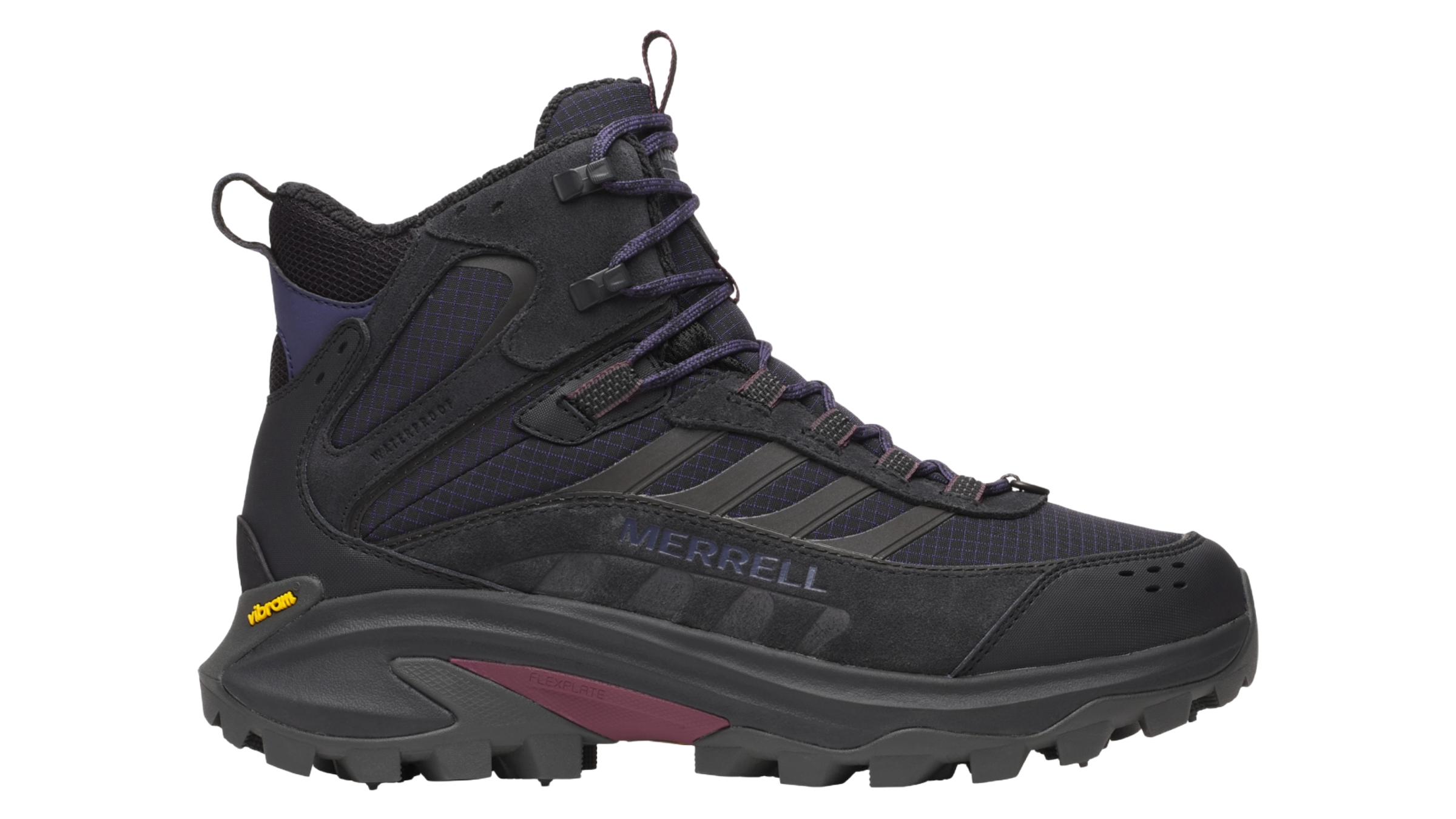
Paid Advertisement by Merrell
Merrell Moab Speed 2 Thermo Mid Waterproof
Merrell’s Moab Speed 2 Thermo Mid Waterproof provides warmth and weather protection without the weight—so you can enjoy all your favorite winter activities in comfort. This boot features waterproof suede leather, a nylon ripstop upper, and a waterproof membrane to seal out water and let moisture escape. Plus, Primaloft®️ Gold Eco insulation and a SOLARCORE®️ Aerogel insole provide superior underfoot warmth, while being extremely flexible and ultra-thin.
Best for Big Days
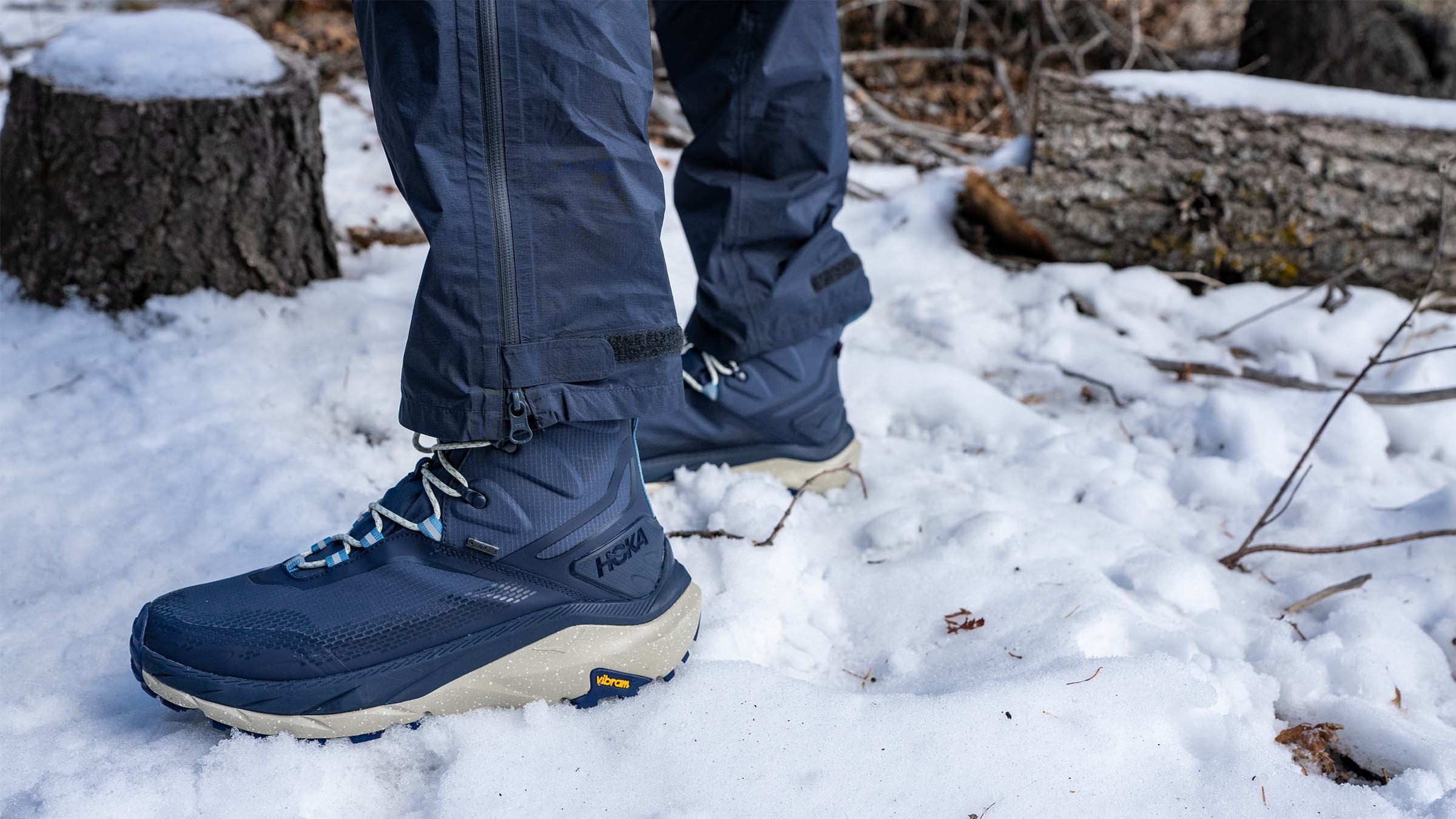
Hoka Kaha 2 Frost GTX
Sizes: Men’s 7-15, Women’s 5-11
Pros and Cons
+ Cushy midsole
+ Very warm
+ Impressive grip
– Expensive
– Too bulky for some traction devices
Hoka is well known for helping kick off the chunky midsole trend in hiking boots and trail runners. With the Kaha 2 Frost GTX, you get all the cush of your favorite warm-weather boot, along with the giant heel brake, but pumped up with gobs of insulation to keep your feet warm on the coldest days.
Thanks to all the cushioning, these boots were great for long, demanding miles. I clambered over chunky scree, across manky snow, and through sticky mud on several nine- and 10-mile mixed-terrain hikes in the Sandia Mountains outside Albuquerque, New Mexico. Even though my quads were worked from the distance, my feet were totally unscathed thanks to a squishy, dual-density, compression-molded EVA midsole and the signature forked, extended heel, which saved energy and helped with downhill braking. The only downside to that jumbo heel? It makes compatibility with traction devices, like microspikes, iffy. We had to go up a full size just to fit them over the front and back lips of the Frost GTX.
ADVERTISEMENT
Unlike most active winter boots, which use a lighter 200 grams of insulation, Hoka stuffs its Kaha Frost with 400 grams—a mix of synthetic insulations from Gore and Primaloft—plus a layer of aluminum lining in the sole. The tongue, too, has 400 grams of Primaloft Gold. I wore these boots on a five-degree day gathering firewood outside El Valle, New Mexico, and my feet were plenty warm. In temps above freezing, you’ll quickly overheat in these Gore-Tex-wrapped ovens.
At nearly $300, the Hokas are an investment. But if you live in a perpetually-cold part of the world, these boots are your ticket to pain-free miles in the snow.
Best for Bushwacking
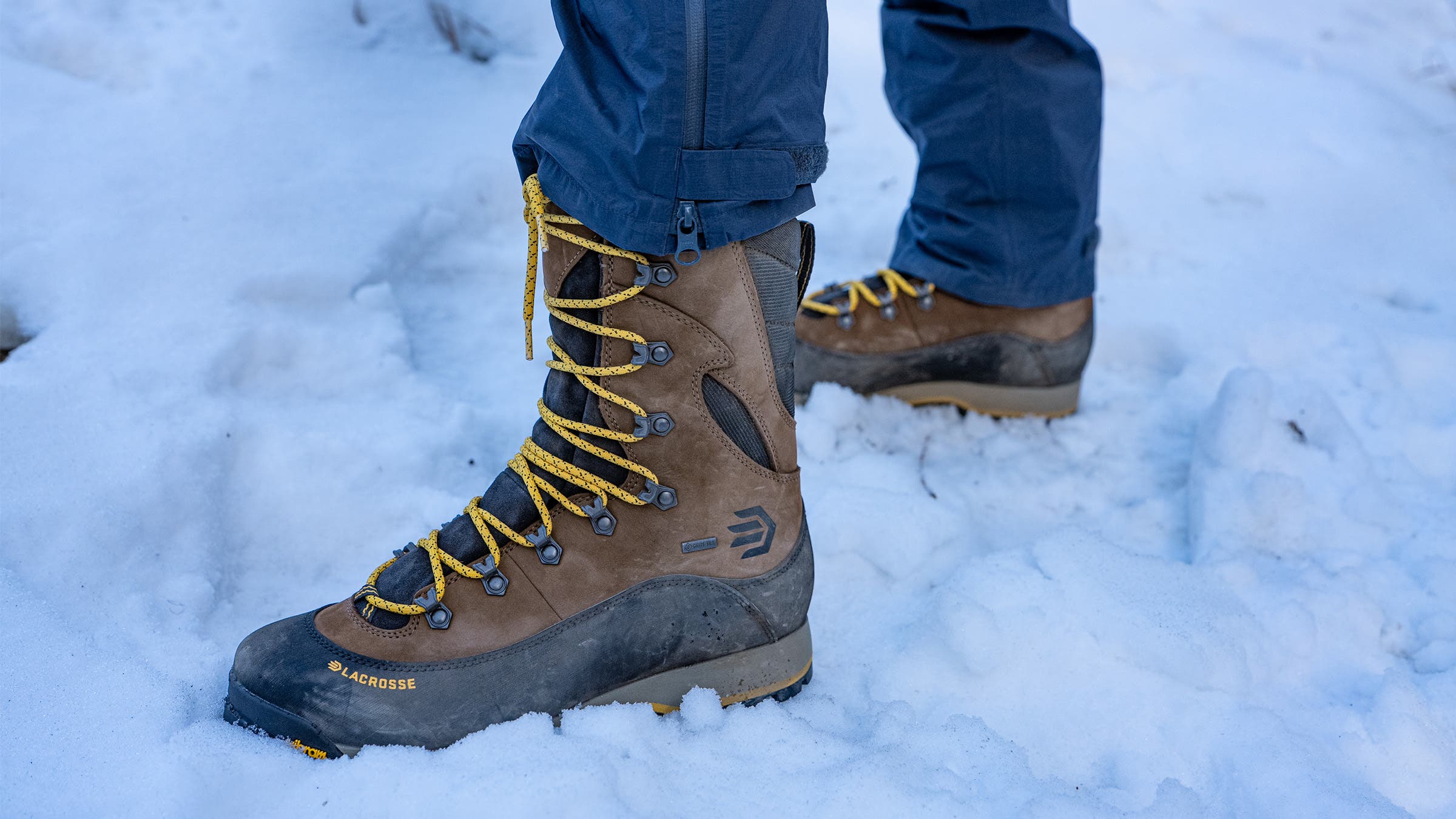
Lacrosse Ursa LS GTX
Sizes: Men’s 7-15
Pros and Cons
+ High collar keeps snow out
+ Surprisingly lightweight
+ Durable
– Pricey
– Some break-in needed
Slipping on a pair of Ursas feels like suiting up for a medieval duel. With a 10-inch collar, stiff sole, and a substantial rubber rand around the entire foot, these boots are true winter armor. The Ursas kept us protected while bushwhacking up steep terrain on hunting trips, cutting firewood in the dead of winter, and slogging through frozen construction sites.
We put in plenty of testing time on longer trails to make sure a boot this burly wasn’t going to kill our feet. Testers took it slow for the first couple hikes, and were pleasantly surprised that the boots started to break in after just a few days. No one got blisters or complained of major foot fatigue. (The boots’ 3.8-pound weigh-in, however, didn’t exactly inspire us to tackle 30-mile days.)
ADVERTISEMENT
Despite the high cuff, the Ursas were easy to slip on and never felt like they held us back from moving fluidly, even on a 15-mile day in mixed conditions that included plenty of snow and mud. We found that the suede and nylon cuff (which took a full minute to lace up properly), provided extra confidence and padding that a gaiter simply couldn’t, comfortably protecting us as we tore through brush and snow off-trail and used the boots to brace felled trees while operating a chainsaw. The ultra-aggressive Vibram outsole was overkill for walks down dirt paths, but proved ideal in mud and snow where muck-evacuating lugs kept us stable.
We put the Ursas into rotation instead of the Meindl Air Revolution Alpine Pro 200 any time we were heading out into exceptionally deep snow or mud. We found the Ursa’s construction, with a full-length shank, to be just as supportive as the Meindl’s when it came to hauling heavy loads, whether it was tree rounds or meat.
Lacrosse offers this boot in both insulated and non-insulated versions. The non-insulated pair allows an extended seasonal range: wearing them on warmer days into the 60s, we found that our feet got a little sweaty when working hard, but not so sweaty that we felt like pulling the boots off. And with wool socks, they felt cozy down to around 20 degrees. With the insulated version, which adds 400 grams of Primaloft Gold synthetic, you can expect to keep those toes toasty down to 0-degrees, but they’re swampy above 40.
ADVERTISEMENT
How to Choose Winter Hiking Boots
The first question to ask about buying winter hikers: Where and how will I use them? Do you live in Colorado and love to snowshoe, or are you down in Georgia and just in need of something waterproof and warmer than a three-season boot? Will you be running and fast-packing in the boots, or carrying an elk over rough terrain and sitting around a campfire? Narrowing down your use-case is absolutely necessary because winter hikers are more specific in their design than normal hikers—you don’t want to get stuck with a boot that’s too warm, heavy, or stiff, or one that lacks adequate insulation and support. To help you make the right choice, here are the factors you’ll want to consider.
Insulation
In our testing, most synthetic insulations are similar in terms of warmth. Pay less attention to the type of insulation and more to the amount. Hikers that will keep you warm in the snow but not overheat your foot often come with about 200 grams of insulation. Some boots also use reflective liners or threads, similar to space blanket material, to bounce heat back at the wearer. Others use air or gas-filled aerogels, particularly around the toe area. Unless you’re heading for very cold climates or doing a lot of standing around, be aware that boots with heavy and varied insulation can cause sweaty, blistered feet.
ADVERTISEMENT
Traction
Just like winter tires that are designed to perform on snow and ice, some winter hikers come with outsoles made of soft rubber compounds that remain flexible in cold temperatures. Vibram’s Artic Grip outsole, for example, has a proprietary compound that makes a noticeable difference in terms of traction on wet ice. Lug design is a factor, too: tiny, biting teeth for gripping snow and large voids for evacuating slush can make all the difference. Be aware that no outsole can provide sure-footedness on ice, no matter the compound used, and traction aids, like microspikes or crampons, are often necessary.
Waterproofing
If you’re serious about winter hiking, your boot should have a waterproof membrane. We’ve seen folks head out with treated leather boots, and they never perform as well as a tried-and-true Gore-Tex (or similar) membrane. We’re sticklers about moisture, because wet, cold feet can mean the end of your hike—or worse.
ADVERTISEMENT
Fit
Like all boots, winter hikers will tear your feet to pieces if they don’t fit well. Even if you can’t try on your preferred boots at a local store, go ahead and order them, wear them around your house for a couple days, and make sure your foot isn’t screaming to get out. You’ll want to pay attention to things like heel slippage (which causes blisters), toe space (too little can cause bruising on the downhill), overall width, ankle support, and how easy they are to pull on and off.
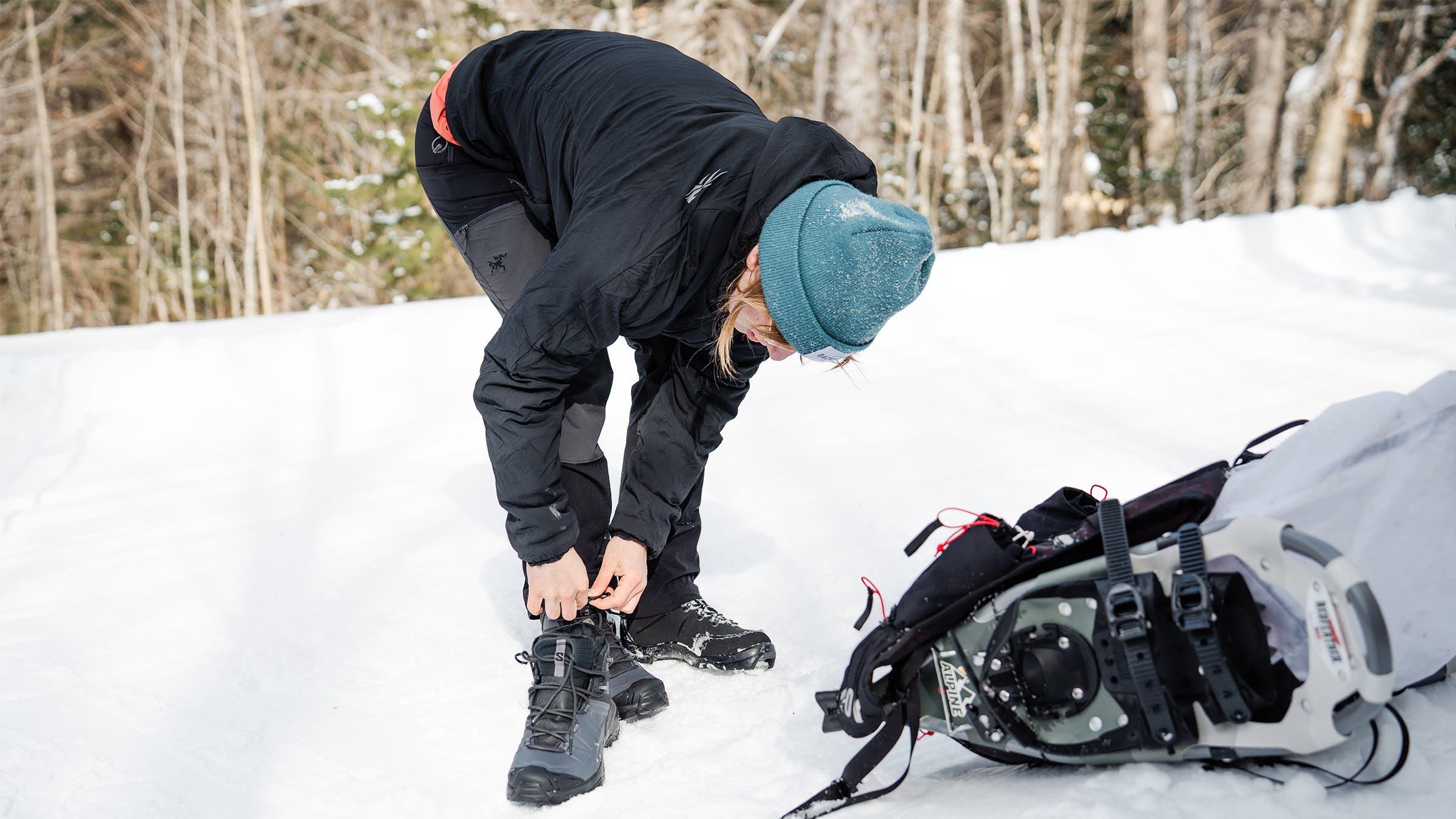
How We Test Winter Hiking Boots
- Number of testers: 16
- Number of products tested: 59
- Coldest temp while testing: -20 F (Copper Center, Alaska)
- Hours spent standing in icy rivers: 3 (El Rito, New Mexico)
- Miles hiked: 500+ (Anchorage, Copper Center, Albuquerque, Santa Fe, Seattle, Bavaria, Maine, Colorado)
- Highest elevation reached: 14,004 feet (Huron Peak, Colorado)
To put these boots through their paces, we set out to the coldest, snowiest places we could find, from Alaska to Bavaria, Germany. Testers ran the gamut from carefree van dwellers who were criss-crossing the country to winter athletes to moms and dads with just a few hours to burn off steam. During the test we clomped through fresh snow, tried our best to slip in icy parking lots, strapped into snowshoes, post-holed on late-winter hikes, and stood around in snowbanks to see how long it took for our feet to go numb. But most importantly, we put in miles. If a boot wasn’t comfortable, supportive, and reliable, it didn’t make our list.
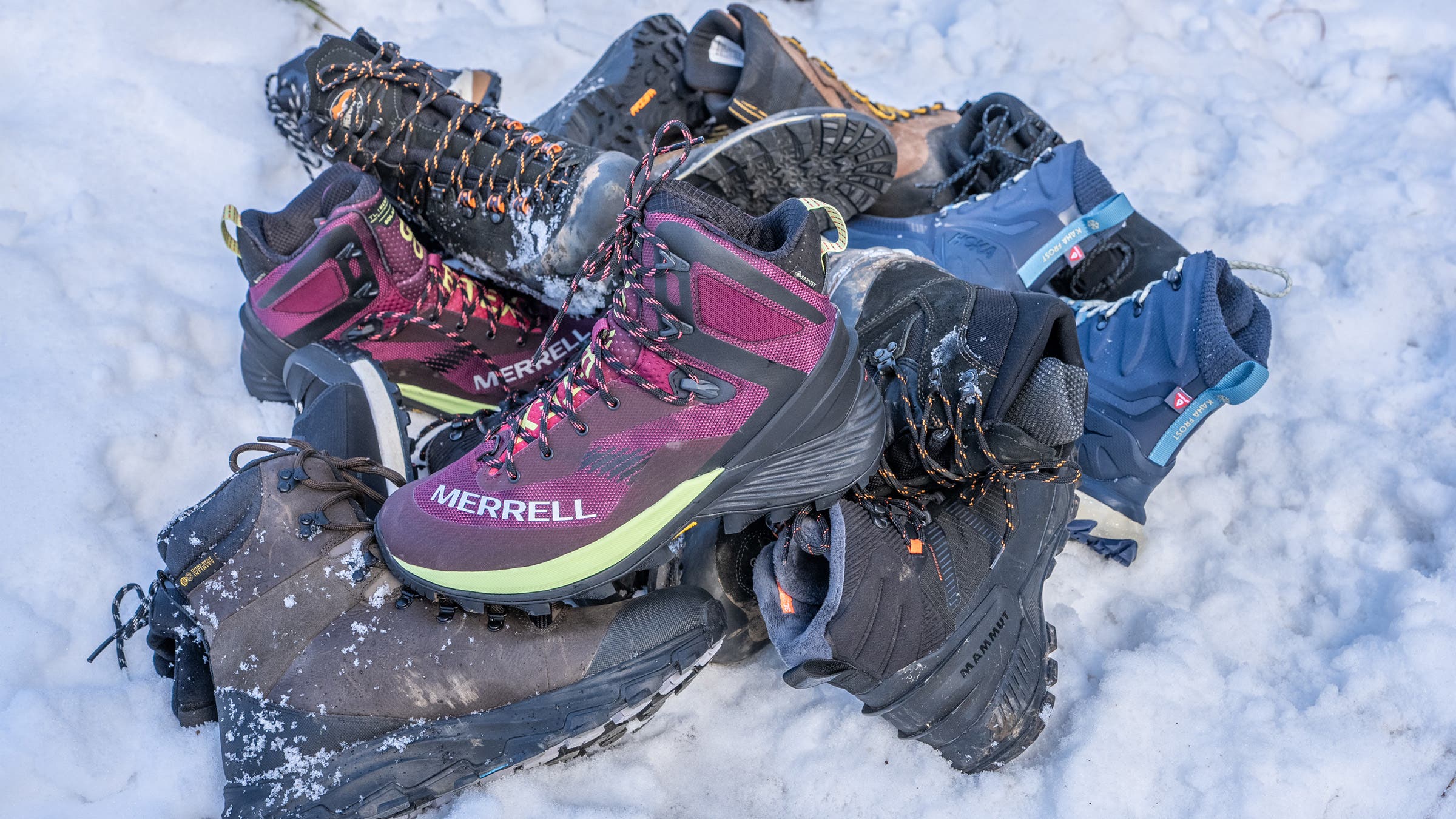
Meet Our Testers
Jakob Schiller
Category manager Jakob Schiller is a gear columnist for Outside. Over a decade of footwear testing, he guesses that he’s worn over 250 pairs of hiking boots. Winter is his favorite season by far, so he’s happiest when spending time on the snow and in the woods.
Charlie Ebbers is a long-time Outside contributor and an avid runner and hunter who lives in Alaska and works for the BLM. For the past year he’s been building a cabin in rural Alaska and frequently tests shoes in temps that are well below zero.
Kip Malone has tested footwear for Outside for the past seven years and is known as the team’s resident crank because of his hard-to-please feet. As a Seattle, Washington native, he is the authority on waterproof boots.
